
Conditions & Services
Thyroid Disorders
Diagnosis, treatment and long-term monitoring of underactive and overactive thyroid, thyroid test abnormalities and related symptoms — to restore hormone balance and protect your energy, weight, heart and metabolism.
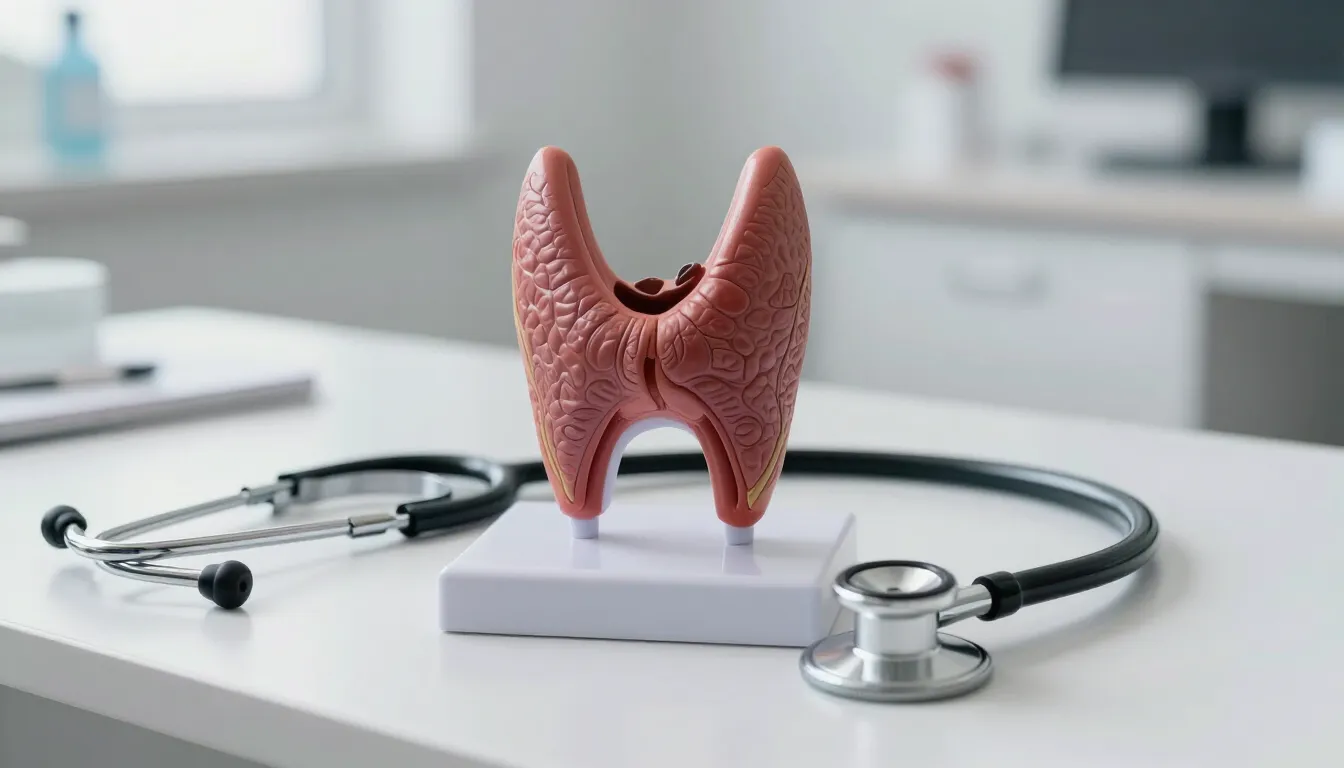
The thyroid is a small, butterfly-shaped gland in the front of the neck that produces hormones controlling how fast the body uses energy — your metabolism. When it makes too little or too much hormone, the effects are felt throughout the body: energy levels, weight, heart rate, temperature tolerance, mood, digestion, skin and hair, and menstrual cycles can all change. Thyroid disorders are common, often run in families, and are very treatable once correctly identified.
This service covers the full evaluation and management of thyroid problems — underactive thyroid (hypothyroidism), overactive thyroid (hyperthyroidism), autoimmune thyroid disease, abnormal thyroid blood tests, thyroid medication review and monitoring, thyroid-related symptoms, and structural concerns such as goitre and nodules. The aim is not simply to normalise a blood number, but to relieve symptoms, choose the right dose for you, and monitor safely over the long term.
How the thyroid works
The thyroid gland makes two main hormones — T4 (thyroxine) and T3 (triiodothyronine) — from iodine in the diet. These hormones set the speed at which cells throughout the body consume energy. The gland is controlled by the pituitary gland in the brain, which releases TSH (thyroid-stimulating hormone) to tell the thyroid how much hormone to make. When the thyroid is underactive, TSH rises; when it is overactive, TSH falls. This feedback loop is why a simple TSH blood test is usually the first and most sensitive check of thyroid function.
Common patient concerns
- “My TSH is slightly high — do I need tablets?” A mildly raised TSH (subclinical hypothyroidism) does not always need treatment; the decision depends on the level, symptoms, age and antibody status.
- “I feel tired and have gained weight — is it my thyroid?” These can be thyroid symptoms, but they are also common in the general population, so blood tests are needed to confirm rather than assume.
- “I’m on thyroxine but still don’t feel well.” Dose, timing, absorption and other causes of ongoing symptoms all need careful review.
- “My thyroid is overactive — will I need radioactive treatment or surgery?” Many cases are managed with tablets first; the right option depends on the cause, severity and your preferences.
- “I have a swelling in my neck.” Most goitres and nodules are benign, but they need assessment and sometimes an ultrasound to rule out anything concerning.
- “My thyroid tests are abnormal but I feel fine.” Not every abnormal result needs immediate treatment — some patterns are monitored, especially mild or borderline changes.
Common symptoms of thyroid dysfunction
Thyroid symptoms tend to fall into two opposite patterns. An underactive thyroid slows the body down; an overactive thyroid speeds it up. Many symptoms are non-specific and overlap with other conditions, which is why blood testing is essential before attributing them to the thyroid.
- Underactive (hypothyroidism): tiredness, weight gain despite eating less, feeling cold, dry skin and hair, hair loss, constipation, slow heart rate, heavy or irregular periods, low mood, muscle aches, puffiness.
- Overactive (hyperthyroidism): weight loss despite increased appetite, feeling hot and sweaty, palpitations or fast/irregular heartbeat, anxiety and irritability, tremor, frequent loose stools, difficulty sleeping, eye changes in some forms.
When a thyroid problem may be suspected
- Symptoms suggesting an under- or overactive thyroid.
- An abnormal TSH or thyroid hormone result found on a routine health check.
- A family history of thyroid disease or autoimmune conditions.
- A visible or felt swelling in the front of the neck (goitre or nodule).
- New or unexplained changes in weight, heart rate, mood or menstrual pattern.
- Pregnancy planning or pregnancy, when thyroid function affects both mother and baby.
- Use of medicines that can affect thyroid function (for example amiodarone or lithium).
Medical evaluation
Your assessment includes a review of your symptoms, full medical and family history, current medicines, and a physical examination of the neck for enlargement, nodules or tenderness. The heart rate, reflexes, skin and hair are also examined for signs of thyroid imbalance. Particular attention is paid to whether the picture fits an under- or overactive thyroid, whether an autoimmune cause is likely, and whether there are any structural concerns needing imaging.
Thyroid function tests and relevant investigations
- TSH — the most sensitive first-line test of thyroid function.
- Free T4 (and free T3 where indicated) — to confirm the hormone level when TSH is abnormal.
- Thyroid antibodies (anti-TPO, TSH receptor) — to identify autoimmune causes such as Hashimoto’s or Graves’ disease.
- Repeat testing after a few weeks for borderline or mild abnormalities, as results can fluctuate.
- Thyroid ultrasound — to assess goitre or nodules when a structural problem is suspected.
- Other bloods as needed — cholesterol, blood sugar, iron/anaemia screen — because thyroid disorders often sit alongside other metabolic conditions.
Thyroid hormone abnormalities
Abnormal results fall into clear patterns. A high TSH with low T4 indicates overt hypothyroidism; a high TSH with normal T4 is subclinical hypothyroidism. A low TSH with high T4 (or T3) indicates overt hyperthyroidism; a low TSH with normal T4 is subclinical hyperthyroidism. Each pattern has a different meaning, a different threshold for treatment, and a different monitoring plan — which is why interpreting the numbers in context matters more than any single value. For detailed interpretation, see Abnormal Thyroid Function Tests, High TSH and Low TSH.
Treatment and long-term monitoring
Treatment is matched to the specific problem. An underactive thyroid is treated with daily levothyroxine tablets to replace the missing hormone, with the dose adjusted to your TSH and reviewed periodically. An overactive thyroid may be managed with anti-thyroid tablets, radioactive iodine, or occasionally surgery, depending on the cause and your circumstances. In all cases, monitoring over time is essential — doses change with age, weight, pregnancy and other conditions, and overtreatment is as harmful as undertreatment. For medication-specific guidance, see Thyroid Medication Review and Levothyroxine Monitoring.
Lifestyle and follow-up
- Take levothyroxine on an empty stomach, at a consistent time, and separate from calcium, iron and certain foods that reduce absorption.
- Maintain steady iodine intake — neither too little nor excessive; avoid high-dose iodine supplements unless advised.
- Keep weight, blood sugar and blood pressure in check, as thyroid disorders often travel with other metabolic conditions.
- Attend scheduled blood-test follow-ups so the dose stays correct over time.
- Tell your doctor about pregnancy planning or new medicines, as these can change thyroid requirements.
When medical consultation is important
- A newly abnormal TSH or thyroid hormone result on a blood test.
- Symptoms of an under- or overactive thyroid.
- A neck swelling, lump, or change in the shape of the thyroid.
- Ongoing symptoms despite being on thyroid medication.
- Palpitations, rapid or irregular heartbeat with a thyroid abnormality.
- Unexplained weight change, fatigue or hair loss with abnormal tests.
- Pregnancy planning or pregnancy with a known or suspected thyroid disorder.
- A desire for a careful review of your thyroid medicines and doses.
In-clinic and teleconsultation
Consultations are available both in-clinic in Bhubaneswar and over teleconsultation, so ongoing thyroid monitoring and medication review are easy to maintain. A flat ₹500 fee applies to either format. Use any “Book an appointment” button on this page to schedule your visit.
Conditions we treat
Conditions and Problems We Help With
Tap any topic below to read a patient-friendly explanation and learn how Dr. Nayak approaches it.
Explore more
Connected care areas
Take action now
Schedule your consultation today with Dr. Nayak
Don't wait to get the healthcare you deserve. Book your appointment in just a few clicks.