
Conditions & Services
Kidney Health
Evaluation and care of kidney function, abnormal kidney tests, protein and blood in the urine, and the metabolic and cardiovascular factors that affect the kidneys — to find the cause, protect kidney function and prevent long-term damage.
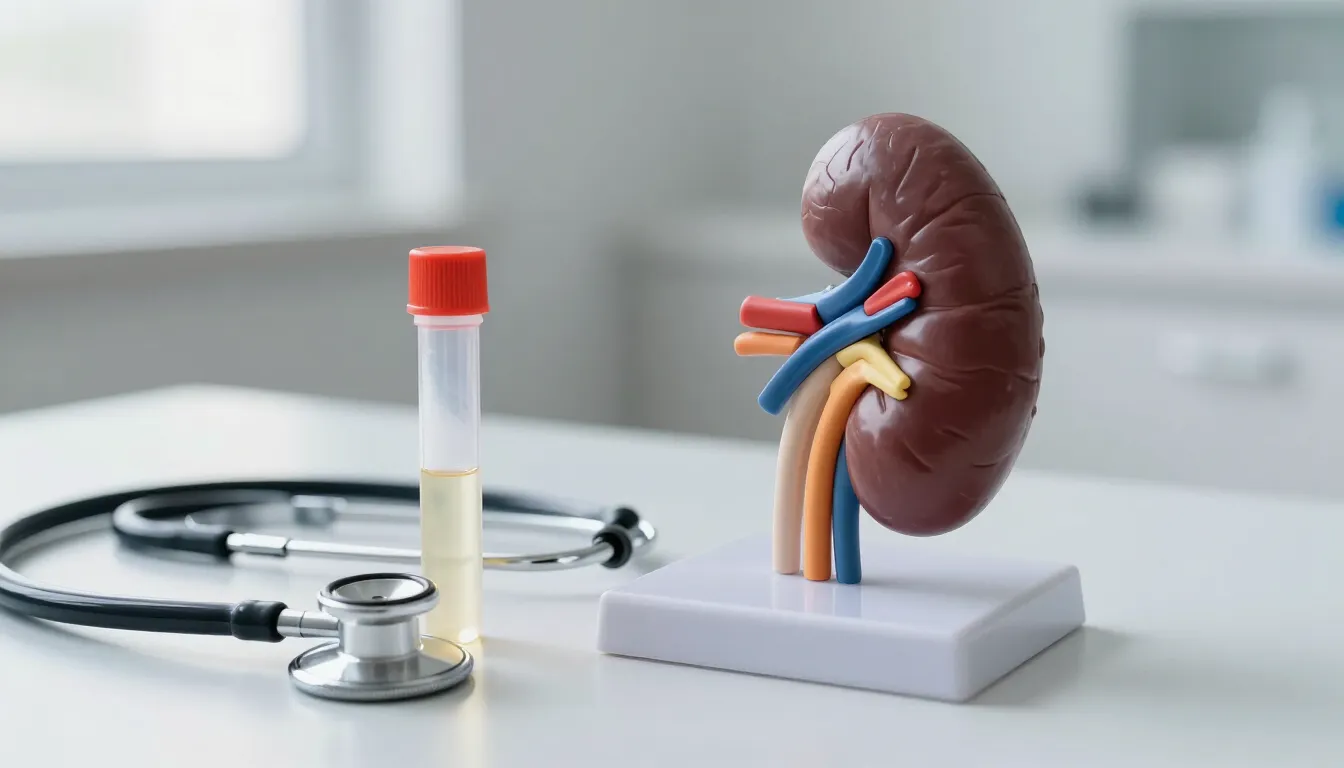
The kidneys filter waste and extra water from the blood, balance salts and minerals, help control blood pressure, and support healthy blood count and bone health. Because kidney problems usually develop silently — often with no symptoms until function is significantly reduced — they are frequently first picked up on a routine blood or urine test. The aim of this service is to find out why a kidney result is abnormal, identify any underlying cause, protect the kidney function you have, and prevent further damage over the long term.
This service covers the full range of kidney-related concerns seen in an Internal Medicine / General Physician practice — chronic kidney disease and reduced kidney function, high creatinine and low eGFR, abnormal kidney function tests, protein and albumin in the urine (including microalbuminuria and the urine albumin-to-creatinine ratio), diabetic and hypertensive kidney disease, kidney-related swelling, blood and foam in the urine, changes in urination such as frequent urination or reduced urine output, and ongoing kidney health monitoring. Where a problem overlaps with diabetes, blood pressure, swelling, urinary symptoms or abnormal test results, Dr. Nayak connects the care across the relevant services.
Common kidney-related concerns
Most people come in for one of a few reasons: a blood test showing a raised creatinine or low eGFR, a urine report mentioning protein, albumin or blood, swelling of the legs or face that may be kidney-related, foamy urine, or a change in urination pattern. Some already know they have diabetes or high blood pressure and want to know whether their kidneys are affected; others have no symptoms at all and are simply worried by an abnormal report. Each of these is explored in its own page below.
Kidney function and why it matters
Kidney function is usually measured by the estimated glomerular filtration rate (eGFR), calculated from the creatinine in your blood along with your age and sex. A normal eGFR is around 90 or above; lower values indicate reduced filtering capacity. Kidney function naturally declines a little with age, but a persistent fall, or a value well below the expected range, needs assessment. Because the kidneys can keep working with no symptoms until function is quite low, regular testing — not waiting for symptoms — is the only reliable way to catch problems early.
Diabetes and kidney health
Diabetes is the single commonest cause of kidney damage worldwide. Over years, persistently high blood sugar damages the small filtering vessels of the kidneys, causing them to leak albumin into the urine and, eventually, to lose filtering capacity. The earliest sign is a tiny leak of albumin (microalbuminuria), which appears years before blood tests change — which is why annual kidney screening is essential for everyone with diabetes. Good sugar and blood pressure control, together with specific protective medicines, can slow or halt this damage. See Diabetic Kidney Disease and Kidney Disease in Diabetes for the detailed explanation.
High blood pressure and kidney health
High blood pressure is the second major cause of kidney damage, and it works in both directions — uncontrolled blood pressure damages the kidney filters, and kidney disease itself raises blood pressure. Controlling blood pressure is therefore one of the most effective ways to protect the kidneys, and specific blood-pressure medicines also reduce protein leak. See Hypertensive Kidney Disease for how the two are linked and managed together.
Abnormal kidney function tests
A “kidney function test” usually means serum creatinine, eGFR, blood urea and electrolytes (sodium, potassium, chloride, bicarbonate). A raised creatinine or low eGFR indicates reduced filtering capacity; abnormal electrolytes can point to specific kidney-handling problems. A single mildly abnormal result can be caused by dehydration, a recent medicine or a muscle-related factor, so the first step is usually to repeat the test in controlled conditions before concluding there is kidney disease. High Creatinine, Low eGFR and Abnormal Kidney Function Tests each have their own focused pages.
Urine abnormalities
Urine testing is often the earliest window into kidney health. Protein or albumin in the urine signals a leak from the filters; blood in the urine (haematuria) may come from the kidneys or the urinary tract; and foamy urine can be a visible sign of heavy protein leak. The urine albumin-to-creatinine ratio (ACR) is the standard test for detecting and quantifying albumin leak. Protein in Urine, Albuminuria, Microalbuminuria, Blood in Urine and Foamy Urine are each explored on their own pages, with internal links to the canonical test pages where they overlap with diabetes care.
Medical evaluation
Your evaluation begins with a detailed history — the exact abnormal result, when it was found, any symptoms such as swelling or changes in urination, your fluid intake, medicines (including over-the-counter painkillers), and existing conditions such as diabetes, high blood pressure or recurrent urinary problems. An examination follows, checking blood pressure, fluid status and any swelling. Dr. Nayak then selects the tests that will genuinely clarify the picture — repeating the kidney panel, checking the urine, looking for diabetes and metabolic causes, and arranging imaging — rather than ordering a blanket panel.
Relevant blood and urine investigations
- Kidney function tests — serum creatinine, eGFR, blood urea and electrolytes (sodium, potassium, chloride, bicarbonate).
- Urine routine and microscopy — protein, blood, pus cells, casts and crystals.
- Urine albumin-to-creatinine ratio (ACR) — the standard test for detecting and quantifying albumin leak.
- Blood sugar or HbA1c and lipid profile — to identify the metabolic drivers of kidney damage.
- Serum albumin and total protein — to assess protein loss from the body.
- Complete blood count — to check for the anaemia that often accompanies chronic kidney disease.
- Ultrasound of the abdomen — to look at kidney size, structure, stones or obstruction.
- Further tests when indicated — viral markers, autoimmune screen, or specific tests suggested by the pattern.
Kidney function monitoring
Kidney health is monitored over months and years, not single readings. For most people this means periodic re-testing of creatinine and eGFR, urine ACR, blood pressure, and the related metabolic markers. The frequency depends on the level of risk and the stage of any kidney disease — those with early changes need light monitoring, while those with established kidney disease need a structured plan to prevent progression. Kidney Health Monitoring explains the schedule and what each test is watching for.
Treatment and management approach
Treatment is directed at the cause and at protecting remaining function. For diabetic and hypertensive kidney disease, the cornerstone is tight blood pressure and sugar control, often with specific medicines that also reduce protein leak. Medicines that can harm the kidneys — particularly certain painkillers — are reviewed and avoided where possible. Dietary adjustments (salt, and in later stages protein, potassium and phosphorus) are tailored to the individual. The principle is to treat specifically, to avoid further injury, and to arrange prompt further care when significant disease or warning features are present.
Prevention and long-term kidney health
Much of kidney care is preventive. Keeping blood pressure and blood sugar within target, avoiding prolonged use of kidney-irritating painkillers, staying well hydrated, treating urinary infections promptly, and not smoking all protect the kidneys. For those with diabetes or high blood pressure, annual kidney screening (creatinine/eGFR and urine ACR) is recommended even when you feel well. Because the same risks that harm the kidneys also harm the heart and blood vessels, long-term kidney care is best delivered together with cardiovascular risk management.
Warning signs and when urgent medical evaluation is important
- Markedly reduced urine output or no urine for a day — needs urgent assessment.
- Swelling of the legs, face or abdomen with breathlessness — needs prompt assessment.
- Visible blood in the urine, especially with clots or pain — needs prompt assessment.
- Severe or persistent foamy urine with swelling — needs assessment for heavy protein leak.
- A sudden, large rise in creatinine on testing — needs prompt assessment.
- Confusion, drowsiness or severe breathlessness with known kidney disease — emergency.
- Persistent high blood pressure that is hard to control with kidney abnormalities.
- Persistent nausea, vomiting, itching or metallic taste with kidney abnormalities.
In-clinic and teleconsultation
Consultations are available both in-clinic in Bhubaneswar and over teleconsultation. Review of an abnormal kidney report, repeat-test planning, and ongoing monitoring often suit teleconsultation, while new swelling, visible blood in the urine, markedly reduced urine output or a significantly abnormal panel are best assessed in person with examination and tests. A flat ₹500 fee applies to either format. Use any “Book an appointment” button on this page to schedule your visit.
Conditions we treat
Conditions and Problems We Help With
Tap any topic below to read a patient-friendly explanation and learn how Dr. Nayak approaches it.
Explore more
Connected care areas
Take action now
Schedule your consultation today with Dr. Nayak
Don't wait to get the healthcare you deserve. Book your appointment in just a few clicks.