Conditions & Services
Palpitations & Cardiovascular Symptoms
Assessment of palpitations, awareness of heartbeat, chest discomfort, breathlessness and related cardiovascular symptoms — to find the cause, reassure where appropriate, and direct urgent cases to emergency care.
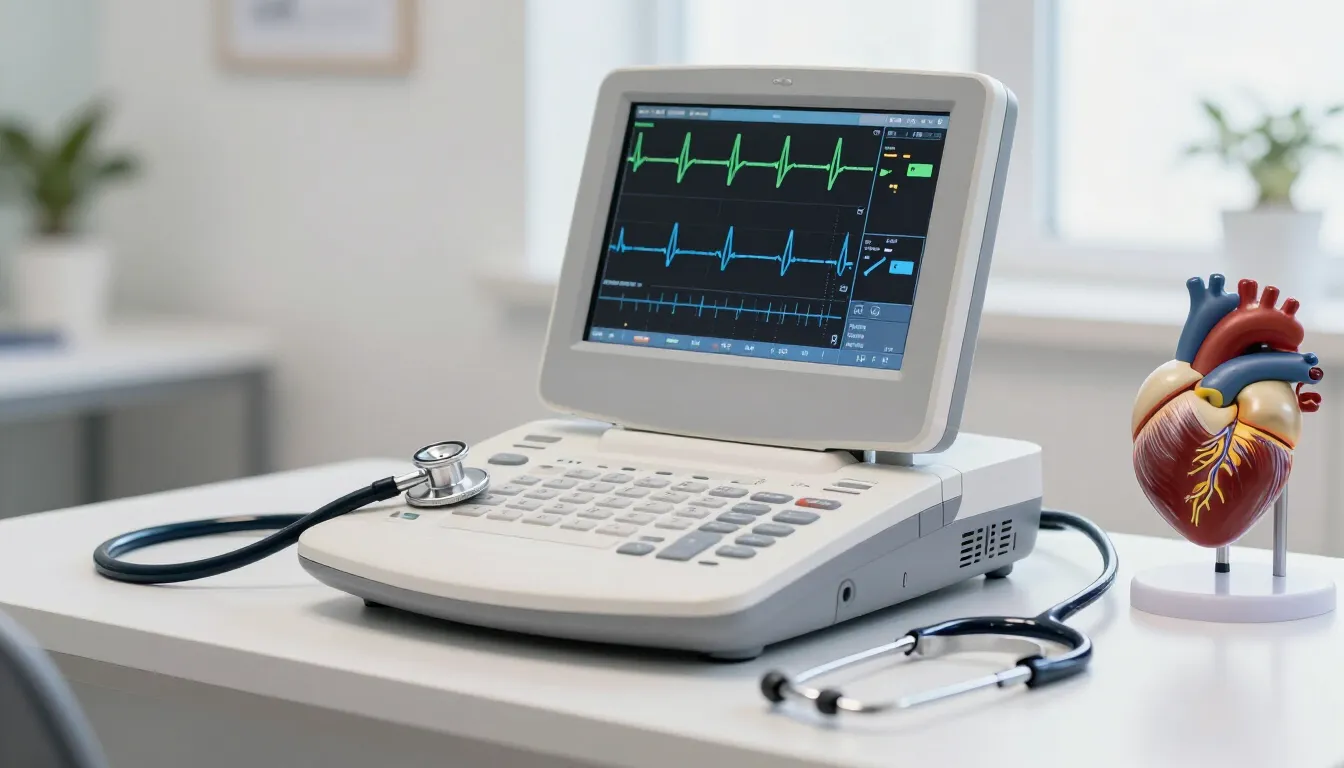
Cardiovascular symptoms — a awareness of your own heartbeat, a fast or irregular pulse, chest discomfort, breathlessness on exertion, or dizziness and faintness — are among the commonest reasons adults seek medical advice. Most often they turn out to be harmless, brought on by stress, caffeine, poor sleep, a temporary illness or anxiety. A smaller fraction points to a heart-rhythm problem, a thyroid disorder, anaemia, or a more serious cardiac cause. The purpose of this service is to sort the two correctly: to reassure confidently when the symptom is benign, and to arrange prompt further assessment when it is not.
This service covers the range of cardiovascular symptoms seen in an Internal Medicine / General Physician practice — palpitations and awareness of heartbeat, fast or irregular heartbeat sensations, skipped beats, chest discomfort and non-specific chest pain, breathlessness on exertion, shortness of breath with palpitations, dizziness or feeling faint with palpitations, a high or low resting heart rate, an abnormal pulse, blood-pressure fluctuations, and the cardiac symptoms that can accompany diabetes or a thyroid disorder. Where a symptom overlaps with breathing problems, blood-pressure care, dizziness or weight, Dr. Nayak connects the assessment across the relevant services rather than duplicating it.
Understanding palpitations and cardiovascular symptoms
Palpitations are the sensation of being aware of your own heartbeat — it may feel too fast, too hard, irregular, or as though it is skipping or adding beats. They are extremely common and, in most people, are benign. The same awareness can be produced by adrenaline from anxiety or excitement, caffeine, nicotine, energy drinks, poor sleep, a feverish illness, dehydration, or certain medicines. The heart itself is usually fine in these cases. The task of the assessment is to separate these common, harmless causes from the less common rhythm problems (such as atrial fibrillation or ectopic beats) and from symptoms that point to the heart muscle or its blood supply.
It helps to distinguish three related but different sensations. Palpitations are the awareness of the heartbeat itself. Chest discomfort is a feeling in the chest — pressure, tightness, heaviness or pain — that may or may not come from the heart. Breathlessness is a sense of not getting enough air. Each can occur alone or together, and the combination matters: palpitations with chest tightness and sweating on exertion is assessed very differently from isolated skipped beats at rest in a calm, well person.
Common patient concerns
- “I can feel my heart beating, especially at night — is something wrong?” Awareness of the heartbeat at rest is common and usually benign, but it is assessed when it is new, frequent or distressing.
- “My heart sometimes races for no reason.” A fast heartbeat can come from anxiety, caffeine or dehydration, or from a rhythm problem — the pattern decides which.
- “It feels like my heart skips a beat or adds an extra one.” Skipped or extra beats are usually ectopic beats and are often harmless, but they are evaluated when frequent or accompanied by other symptoms.
- “I get a strange discomfort in my chest.” Chest discomfort is always taken seriously and assessed for cardiac features first.
- “I feel breathless when I walk uphill now.” New or worsening breathlessness on exertion needs assessment — it can come from the heart or the lungs.
- “My heart races and I feel dizzy or faint.” Palpitations with dizziness or near-fainting need prompt evaluation, as they may reflect a rhythm problem affecting blood flow to the brain.
- “My resting heart rate is always high on my fitness tracker.” A persistently high resting rate can reflect fitness, stress, a thyroid disorder, anaemia or fever, and is worth checking.
Awareness of heartbeat
Being aware of your own heartbeat — noticing it beating in your chest, throat or neck when you would not normally — is a very common reason to seek reassurance. In most people it is simply the result of a quiet environment, lying down, anxiety, caffeine, tiredness or a mild illness, and the heart is healthy. It becomes something to assess when it is new, persistent, accompanied by other symptoms, or when it causes significant worry. See Awareness of Heartbeat.
Fast heartbeat
A fast heartbeat (tachycardia) may be a normal response — to exercise, emotion, pain, fever, dehydration or caffeine — or it may reflect a rhythm problem. The key questions are whether it comes on and stops suddenly, how fast it is, how long it lasts, and whether it brings chest discomfort, dizziness or breathlessness. A sustained fast heartbeat at rest, or episodes with other symptoms, are assessed further. See Fast Heartbeat; for a persistently elevated resting rate as a finding, see High Resting Heart Rate.
Irregular heartbeat sensation
An irregular heartbeat sensation — the heart feeling out of rhythm, with pauses, jumps or an uneven pattern — is commonly caused by occasional ectopic beats, which are usually harmless. A persistently irregular pulse, however, can indicate atrial fibrillation, an important rhythm problem that raises the risk of stroke and needs specific management. Distinguishing the two is a key reason to assess an irregular sensation rather than dismiss it. See Irregular Heartbeat Sensation and Skipped Heartbeat Sensation.
Chest discomfort
Chest discomfort covers a range of feelings — pressure, tightness, heaviness, aching or sharp pain — and can come from the heart, the lungs, the muscles and ribs, the stomach or acid reflux, or anxiety. Because some causes are serious, chest discomfort is always assessed for cardiac features first: whether it comes on with exertion and eases with rest, is pressing or crushing, radiates to the arm, jaw or back, or comes with sweating, nausea or breathlessness. These features point towards angina or a heart attack and need emergency care. See Chest Discomfort and Non-specific Chest Pain; chest tightness is covered under Respiratory & Breathing Problems.
Breathlessness and cardiovascular symptoms
Breathlessness can come from the heart as well as the lungs. Heart-related breathlessness tends to come on with exertion, may worsen over time, and can be accompanied by ankle swelling, a feeling of the heart racing, or breathlessness that wakes you from sleep and forces you to sit upright. New or worsening exertional breathlessness, especially with palpitations or swelling, is assessed for a cardiac cause alongside the respiratory causes. See Breathlessness on Exertion and Shortness of Breath with Palpitations; the general symptom is covered under Respiratory & Breathing Problems.
Dizziness and fainting symptoms
Dizziness or a feeling of faintness alongside palpitations can occur when a rhythm problem briefly reduces blood flow to the brain. It can also come from low blood pressure, dehydration, anaemia or anxiety. Palpitations that come with actual fainting, near-fainting, or dizziness on standing need prompt assessment. See Dizziness with Palpitations and Feeling Faint with Palpitations; the general dizziness and lightheadedness symptoms are covered under Migraine, Headache & Neurological Symptoms.
Common possible causes
The cardiovascular symptoms covered here share a manageable set of common causes that the assessment is built around:
- Benign triggers — anxiety, stress, caffeine, nicotine, energy drinks, poor sleep, dehydration and a heavy meal.
- Ectopic (extra) beats — usually harmless skipped or added beats.
- Rhythm problems — including atrial fibrillation, supraventricular tachycardia and other arrhythmias.
- Thyroid disorders — an over-active thyroid commonly causes a fast or irregular heartbeat; an under-active thyroid can slow it.
- Anaemia and low haemoglobin — a fast heartbeat and breathlessness on exertion.
- Fever and infection — a fast pulse that settles as the illness resolves.
- Medication effects — including inhalers, certain asthma or cold remedies, and thyroid or blood-pressure medicines.
- Blood-pressure changes — including low blood pressure on standing and fluctuations in readings.
- Cardiac causes — angina, heart attack, heart failure or structural heart disease, which are assessed and directed to specialist or emergency care.
- Electrolyte disturbances — such as low potassium, which can trigger palpitations.
Medical evaluation
Your evaluation begins with a careful history — exactly what the sensation feels like, when it started, how often and how long it lasts, what brings it on and what eases it, whether it comes with chest discomfort, dizziness or breathlessness, and your caffeine, sleep, medication, thyroid and diabetes history. An examination of the heart, pulse and blood pressure follows. The pattern described in the history is the single most useful part of the assessment and guides which tests, if any, are needed.
Relevant investigations
Tests are chosen to fit the symptom, not ordered wholesale. A typical assessment may include:
- ECG (electrocardiogram) — a snapshot of the heart’s electrical activity; the first test for any palpitation, irregular pulse or chest discomfort.
- Blood tests — complete blood count for anaemia, thyroid function tests, electrolytes, kidney function, and blood sugar or HbA1c.
- Pulse check and blood-pressure measurement — including standing and sitting readings where low blood pressure is suspected.
- Ambulatory ECG (Holter monitor) — a 24-hour or longer recording to capture episodes that come and go and may be missed on a single ECG.
- Echocardiogram — an ultrasound of the heart, arranged when a structural problem or heart failure is suspected.
- Chest X-ray — when breathlessness or a lung cause is being assessed.
- Further cardiac tests — such as an exercise test or cardiology referral, arranged when the pattern warrants it.
ECG and cardiac evaluation where appropriate
An ECG is a quick, painless recording of the heart’s electrical rhythm and is the natural first test when a rhythm problem is suspected. It is most useful when recorded during the symptom, which is not always possible — so a normal ECG between episodes does not rule out a rhythm problem, and a longer recording (Holter monitor) may be used to catch intermittent palpitations. Importantly, not every cardiovascular symptom needs an ECG: isolated, infrequent palpitations in an otherwise well person with a normal examination may need no test at all, while chest discomfort with cardiac features needs an ECG immediately. The decision is guided by the history and examination, not applied routinely. See ECG Evaluation for Symptoms.
Risk factor assessment
Alongside the symptom, the assessment considers your overall cardiovascular risk — blood pressure, cholesterol, blood sugar, weight, smoking, age and family history — because symptoms are interpreted in the context of that risk. A palpitation in a person with diabetes, high blood pressure and a family history of heart disease is assessed more thoroughly than the identical symptom in a low-risk, otherwise well person. The formal risk estimate is covered under Hypertension & Cardiovascular Risk, and is woven into the assessment here rather than repeated.
Treatment and management depends on the underlying cause
There is no single treatment for “palpitations” or “chest discomfort” — management is directed at the cause the assessment identifies. Benign triggers are managed by reducing caffeine, addressing sleep and stress, and reassurance; ectopic beats in an otherwise normal heart often need no treatment; atrial fibrillation and other arrhythmias are managed with rate or rhythm control and stroke-risk assessment; an over-active thyroid is treated specifically; anaemia is corrected; medication-related symptoms are resolved by reviewing the prescription; and angina, heart attack, heart failure and structural heart disease are directed to urgent or specialist cardiac care. The principle is to find and treat the cause, not to treat the symptom in isolation.
Warning signs and when urgent medical evaluation is important
Most cardiovascular symptoms are not emergencies, but certain features need urgent or emergency care rather than a routine appointment:
- Severe, crushing or pressing chest pain, especially radiating to the arm, jaw or back, with sweating, nausea or breathlessness — possible heart attack; emergency.
- Chest discomfort that comes on with exertion and eases with rest — possible angina; urgent.
- Fainting, or near-fainting, with palpitations — urgent.
- A very fast or very slow heartbeat with dizziness, breathlessness or chest discomfort — urgent.
- Sudden severe breathlessness, or breathlessness that wakes you from sleep and forces you to sit upright — urgent.
- Breathlessness with chest discomfort, sweating or a rapid irregular pulse — urgent.
- Palpitations with confusion, collapse or loss of consciousness — emergency.
When any of these are present, do not wait for a routine appointment — seek emergency care. For less urgent symptoms, Dr. Nayak can arrange a structured assessment, targeted testing and follow-up, and connect you to specialist cardiac care where needed.
In-clinic and teleconsultation
Consultations are available both in-clinic in Bhubaneswar and over teleconsultation. Stable, infrequent palpitations, awareness of heartbeat, and review of known benign ectopic beats often suit teleconsultation, while new or worsening chest discomfort, breathlessness, fainting or a suspected rhythm problem are best assessed in person with examination and an ECG. A flat ₹500 fee applies to either format. Use any “Book an appointment” button on this page to schedule your visit — but if you have any of the warning signs above, seek emergency care first.
Conditions we treat
Conditions and Problems We Help With
Tap any topic below to read a patient-friendly explanation and learn how Dr. Nayak approaches it.
Explore more
Connected care areas
Take action now
Schedule your consultation today with Dr. Nayak
Don't wait to get the healthcare you deserve. Book your appointment in just a few clicks.