
Thyroid Disorders
Hypothyroidism
The condition of an underactive thyroid — low thyroid hormone with a raised TSH, its causes, symptoms and long-term treatment with levothyroxine.
Overview
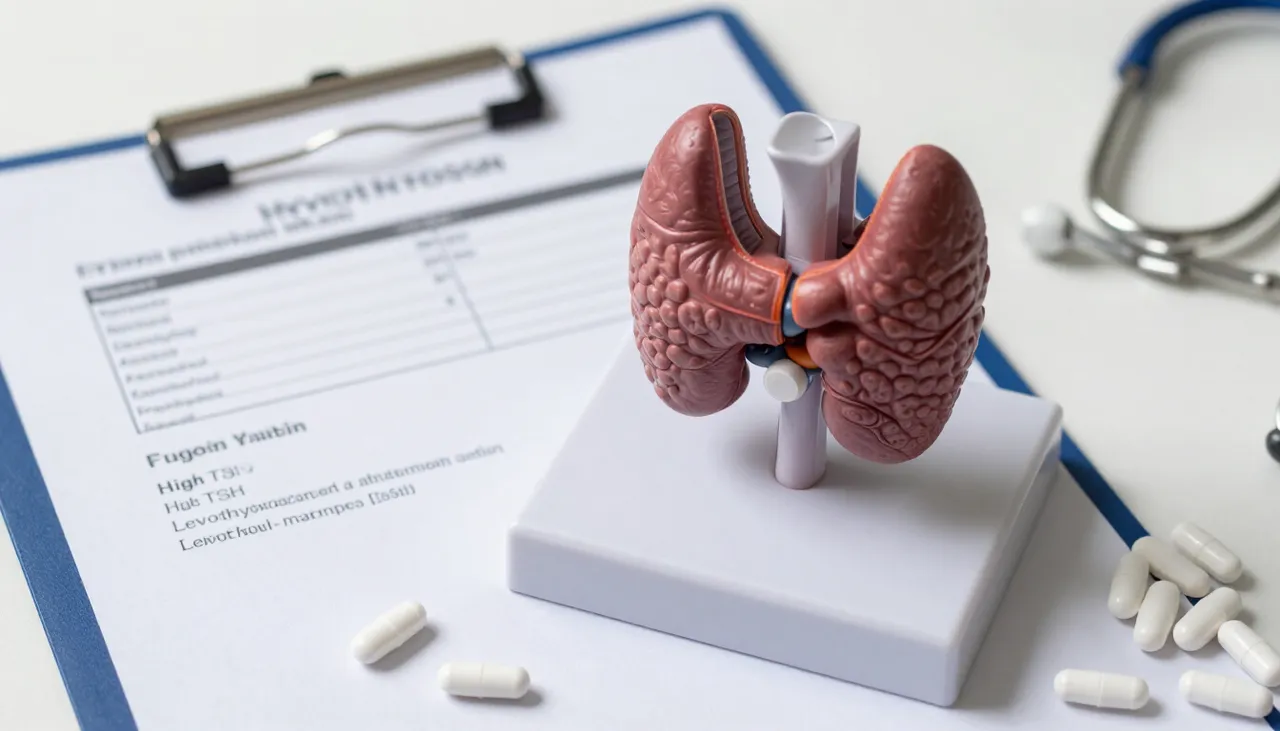
Hypothyroidism is the medical condition in which the thyroid gland does not make enough thyroid hormone, so the body’s metabolism slows down. It is confirmed by a raised TSH with a low free T4 on blood testing. It is common, more frequent in women, and often caused by the immune system gradually damaging the gland (Hashimoto’s thyroiditis). With the correct dose of replacement hormone, most people feel entirely well and live normally.
This page is the clinical overview of hypothyroidism as a condition. For a borderline raised TSH with normal hormone levels, see Subclinical Hypothyroidism; for the most common cause, see Hashimoto’s Thyroiditis; for dose and tablet guidance, see Levothyroxine Monitoring.
Symptoms
- Tiredness and lack of energy.
- Weight gain or difficulty losing weight despite eating less.
- Feeling cold, especially in the hands and feet.
- Dry skin, coarse hair and hair loss.
- Constipation.
- Slow heart rate.
- Heavy or irregular periods; sometimes fertility difficulty.
- Low mood, slowed thinking or forgetfulness.
- Muscle aches, stiffness and puffiness of the face.
Causes and risk factors
- Hashimoto’s thyroiditis — autoimmune destruction of the gland (the most common cause).
- Previous radioactive iodine or thyroid surgery for an overactive thyroid.
- Certain medicines (amiodarone, lithium, excess iodine).
- Pituitary gland problems (rare; causes a low rather than high TSH).
- Family history of thyroid or autoimmune disease.
- Female sex and increasing age.
How it is diagnosed
Diagnosis is made on blood tests: a raised TSH with a low free T4 confirms overt hypothyroidism. Thyroid antibodies (anti-TPO) are often checked to identify an autoimmune cause. A single mild result may be repeated after a few weeks before starting treatment, as TSH can fluctuate with illness or recovery.
Investigations
- TSH and free T4.
- Anti-TPO antibodies where an autoimmune cause is suspected.
- Cholesterol and blood sugar — hypothyroidism can raise cholesterol and often coexists with metabolic conditions.
- Repeat TSH after starting treatment to confirm the correct dose.
Management
Hypothyroidism is treated with levothyroxine — a daily tablet identical to the T4 hormone your own gland should make. The dose is started according to your weight and age, then adjusted using TSH results until it is in the target range. Most people need lifelong treatment, but the dose is reviewed periodically as needs change with age, weight and pregnancy. See Levothyroxine Monitoring for practical dosing guidance.
Follow-up
TSH is rechecked around 6–8 weeks after any dose change, and then at least yearly once stable — more often during pregnancy or if symptoms return. The goal is a normal TSH with no symptoms, on the smallest dose that achieves it.
How we help
Dr. Nayak confirms the diagnosis with appropriate testing, identifies any underlying cause, and starts or adjusts levothyroxine to the correct dose with structured follow-up. Coexisting conditions such as high cholesterol, diabetes or weight issues are assessed together. Consultations are available in-clinic in Bhubaneswar and over teleconsultation.
Related conditions and patient concerns
Hypothyroidism connects to its milder form, its main cause, and the symptoms it produces. These related pages complete the picture.
Explore more
Related conditions
Explore more
Related services
Take action now
Schedule your consultation today with Dr. Nayak
Don't wait to get the healthcare you deserve. Book your appointment in just a few clicks.