
Thyroid Disorders
High TSH
What a raised TSH result actually means — the patterns it can represent, when it confirms an underactive thyroid, and when it just needs repeating.
Overview
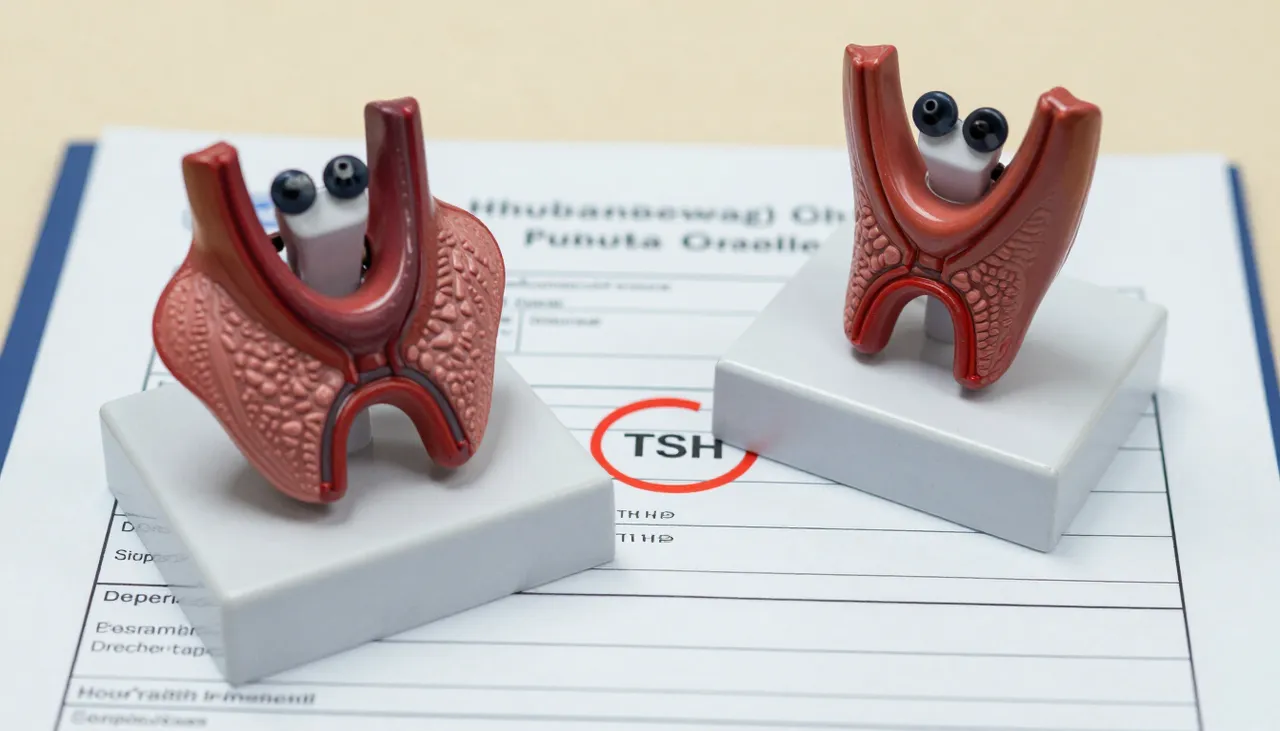
TSH (thyroid-stimulating hormone) is the pituitary’s signal to the thyroid. A raised TSH means the pituitary is working harder to keep the thyroid going — a sign that the gland is underperforming. But “high TSH” is a test result, not a diagnosis by itself: it can represent overt hypothyroidism, subclinical hypothyroidism, a temporary fluctuation, or recovery from illness. Interpreting it correctly is what determines the right action.
This page is about interpreting a raised TSH result. For the conditions it may represent, see Hypothyroidism and Subclinical Hypothyroidism; for the most common underlying cause, see Hashimoto’s Thyroiditis.
What a high TSH can mean
- High TSH with low free T4 — overt hypothyroidism; treatment usually recommended.
- High TSH with normal free T4 — subclinical hypothyroidism; treatment individualised.
- Mildly raised TSH that returns to normal on repeat — transient fluctuation; no treatment.
- Raised TSH during a non-thyroid illness or recovery — often resolves; recheck when well.
Why the level and context matter
A TSH above 10 mIU/L is more likely to need treatment; a TSH between the upper limit and 10 is a judgement call based on symptoms, antibodies, age, cholesterol and pregnancy plans. A single result is rarely enough — confirming with a repeat test and a free T4 is standard practice before committing to lifelong medication.
Evaluation
- Repeat TSH and free T4 after several weeks.
- Anti-TPO antibodies to gauge autoimmune cause and progression risk.
- Assess for symptoms, high cholesterol and other metabolic conditions.
- Consider pregnancy plans, which lower the treatment threshold.
Management
If overt hypothyroidism is confirmed, levothyroxine is started. If subclinical, treatment or monitoring is chosen based on the factors above. If transient, no treatment is needed but periodic rechecking is advised.
How we help
Dr. Nayak interprets your TSH in context, confirms the pattern with repeat testing, and advises clearly whether treatment or monitoring is right for you. Consultations are available in-clinic in Bhubaneswar and over teleconsultation.
Related conditions and patient concerns
Explore more
Related conditions
Explore more
Related services
Take action now
Schedule your consultation today with Dr. Nayak
Don't wait to get the healthcare you deserve. Book your appointment in just a few clicks.