
Palpitations & Cardiovascular Symptoms
Cardiac Symptoms with Thyroid Disorders
How an over- or under-active thyroid affects the heartbeat and cardiovascular symptoms — the link, the evaluation, and when symptoms need prompt attention.
Overview
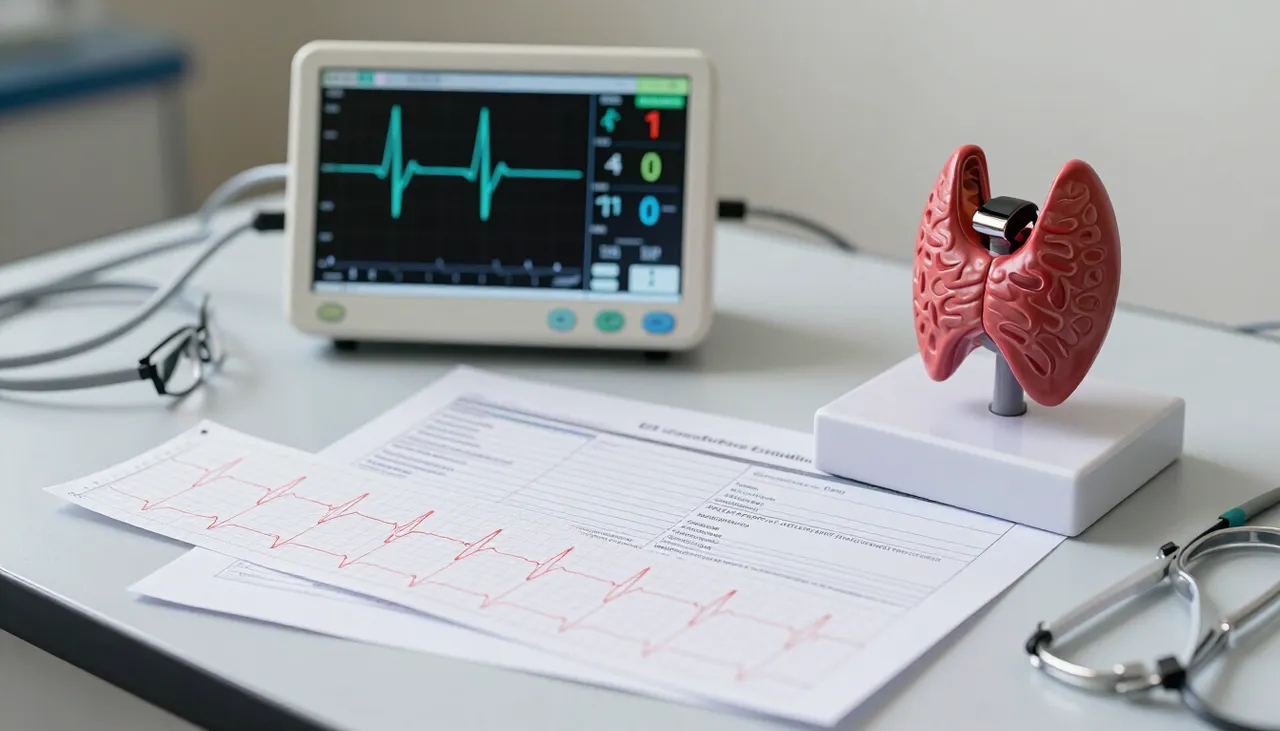
Thyroid hormones have a direct effect on the heart and heartbeat, so thyroid disorders often show up first as cardiovascular symptoms. An over-active thyroid (hyperthyroidism) commonly causes a fast or irregular heartbeat, palpitations, breathlessness on exertion, and a bounding pulse; an under-active thyroid (hypothyroidism) can cause a slow heartbeat, fatigue and breathlessness. Recognising the thyroid link means the symptom is treated at its root rather than as an isolated heart problem. This page covers the cardiac-symptom angle; the management of thyroid disorders is covered under Thyroid Disorders.
How the thyroid affects the heart
- An over-active thyroid speeds the heart — a fast resting rate, palpitations, and a tendency to atrial fibrillation.
- An under-active thyroid slows the heart — a low resting rate and fatigue.
- Thyroid excess can raise blood pressure and cause breathlessness on exertion.
- Both can worsen existing heart conditions and alter the effect of heart and blood-pressure medicines.
Symptoms and associated features
A fast or irregular heartbeat with weight loss, heat intolerance, tremor and anxiety points to an over-active thyroid; a slow heartbeat with weight gain, cold intolerance, dry skin and tiredness points to an under-active thyroid. Palpitations with new atrial fibrillation are a classic presentation of an over-active thyroid and need both rhythm and thyroid assessment.
Evaluation and investigations
Evaluation combines a history and examination with an ECG and thyroid function tests (TSH, free T4), alongside complete blood count, electrolytes and blood sugar. A Holter monitor is arranged when atrial fibrillation is intermittent. See ECG Evaluation for Symptoms, Thyroid Disorders, Thyroid Palpitations and Abnormal Test Results.
Management overview
Management treats the thyroid disorder alongside the cardiac symptom. An over-active thyroid is treated with medication and, where appropriate, definitive therapy; atrial fibrillation is managed with rate or rhythm control and stroke-risk assessment; an under-active thyroid is treated with levothyroxine; and heart and blood-pressure medicines are adjusted as the thyroid normalises.
Follow-up and monitoring
Follow-up confirms the thyroid is balanced and the cardiac symptoms have settled as a result. Persistent rhythm problems despite thyroid control are reviewed and referred for specialist cardiac assessment when appropriate.
Warning signs — seek urgent care
- A fast irregular pulse with chest pain, dizziness, fainting or breathlessness — urgent.
- A very fast heartbeat with fever, confusion or agitation — possible thyroid storm; emergency.
- A very slow heartbeat with dizziness or fainting — urgent.
- Chest pain with sweating, nausea or pain radiating to the arm or jaw — possible heart attack; emergency.
How we help
Dr. Nayak identifies the thyroid link in cardiovascular symptoms, arranges an ECG and thyroid function tests, treats the thyroid disorder alongside the cardiac symptom, and refers for specialist cardiac or endocrine care when needed. Consultations are available in-clinic in Bhubaneswar and over teleconsultation.
Related conditions and patient concerns
Explore more
Related conditions
Explore more
Related services
Take action now
Schedule your consultation today with Dr. Nayak
Don't wait to get the healthcare you deserve. Book your appointment in just a few clicks.