
Palpitations & Cardiovascular Symptoms
Cardiac Symptoms in Diabetes
Why people with diabetes need careful cardiac symptom assessment — atypical presentations, the role of risk assessment, and when symptoms need urgent care.
Overview
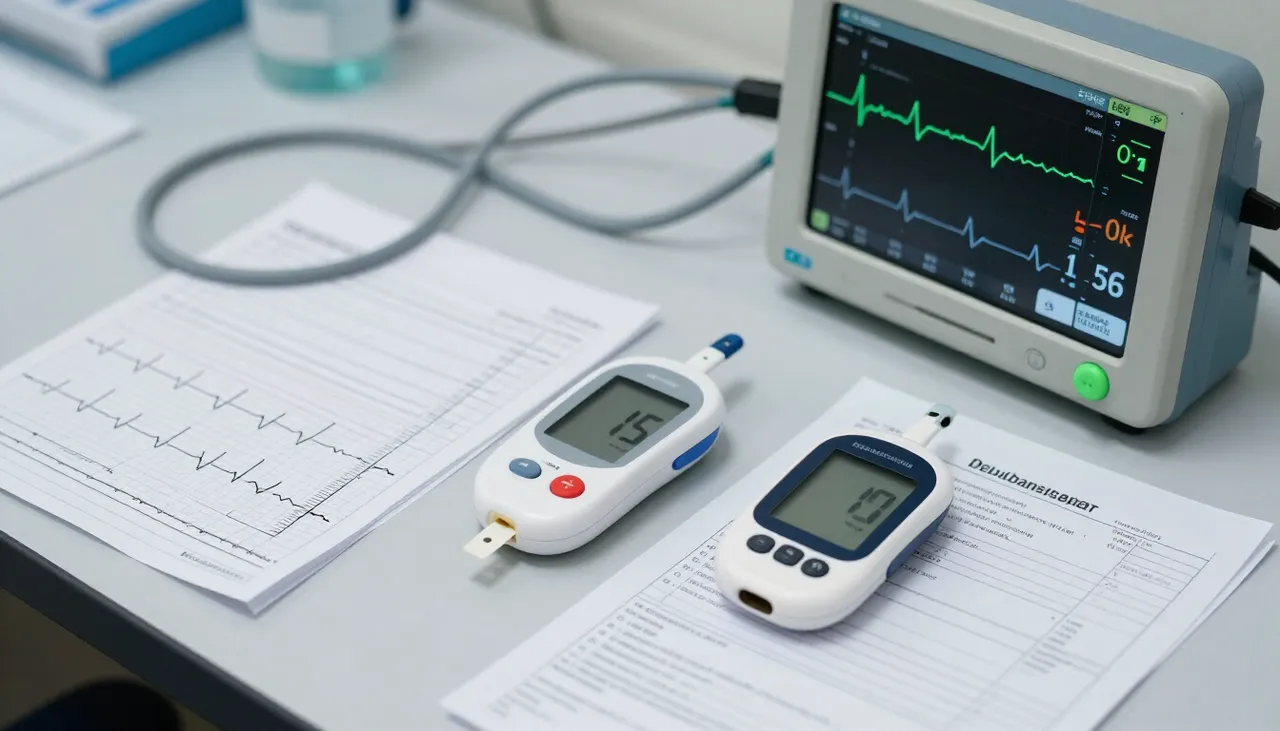
Diabetes raises the long-term risk of coronary disease, heart failure and rhythm problems, and it can change how cardiac symptoms feel. Some people with diabetes experience angina or a heart attack with less typical or even absent chest pain, which means symptoms such as breathlessness, fatigue, dizziness or an irregular pulse are taken seriously and assessed for a cardiac cause rather than attributed to the diabetes alone. This page covers the cardiac-symptom angle; the management of diabetes itself is covered under Diabetes & Metabolic Health.
Why diabetes changes the picture
- Diabetes accelerates coronary artery disease, raising the risk of angina and heart attack.
- Nerve changes (autonomic neuropathy) can dull or alter the typical chest pain of angina.
- Diabetes increases the risk of heart failure, often presenting as breathlessness and fatigue.
- Kidney involvement from diabetes adds to cardiovascular risk.
- Low blood sugar (hypoglycaemia) can cause a fast heartbeat, palpitations and dizziness that mimic a rhythm problem.
Symptoms to assess carefully
In someone with diabetes, new or worsening breathlessness on exertion, chest discomfort, an irregular pulse, dizziness, fainting, or unusual fatigue are assessed for a cardiac cause rather than assumed to be benign. A fast heartbeat with sweating, tremor and hunger may instead reflect low blood sugar and is distinguished from a rhythm problem.
Evaluation and investigations
Evaluation combines a history and examination with an ECG, blood tests (blood sugar or HbA1c, kidney function, cholesterol), and — where indicated — an echocardiogram, a Holter monitor, or cardiology referral. The overall cardiovascular risk is assessed formally. See ECG Evaluation for Symptoms, Cardiovascular Risk Assessment, Diabetes & Metabolic Health and Abnormal Test Results.
Management overview
Management treats the cause alongside good diabetes control: angina and coronary disease are directed to specialist cardiac care; heart failure is managed with medication and specialist input; rhythm problems are managed specifically; and low blood sugar episodes are addressed by adjusting the diabetes treatment. Cardiovascular risk is reduced through blood-pressure, cholesterol and lifestyle measures.
Follow-up and monitoring
Follow-up confirms symptoms are controlled and cardiovascular risk is being actively managed. Persistent or new symptoms are reviewed and referred for specialist cardiac assessment when appropriate.
Warning signs — seek urgent care
- Chest discomfort, breathlessness or fainting in a person with diabetes — assess urgently, even if atypical.
- A fast heartbeat with sweating, tremor and hunger — possible low blood sugar; treat and assess.
- New irregular pulse with breathlessness or dizziness — urgent.
- Chest pain with sweating, nausea or pain radiating to the arm or jaw — possible heart attack; emergency.
How we help
Dr. Nayak assesses cardiac symptoms in people with diabetes carefully, arranges an ECG and targeted tests, manages cardiovascular risk alongside diabetes care, and refers for specialist cardiac care when needed. Consultations are available in-clinic in Bhubaneswar and over teleconsultation.
Related conditions and patient concerns
Explore more
Related conditions
Explore more
Related services
Take action now
Schedule your consultation today with Dr. Nayak
Don't wait to get the healthcare you deserve. Book your appointment in just a few clicks.