
Joint, Muscle & Rheumatology
Joint Pain
The central symptom page for any painful joint — what joint pain is, the patterns that point to a cause, when it is mechanical versus inflammatory, and how it is assessed and managed.
Overview
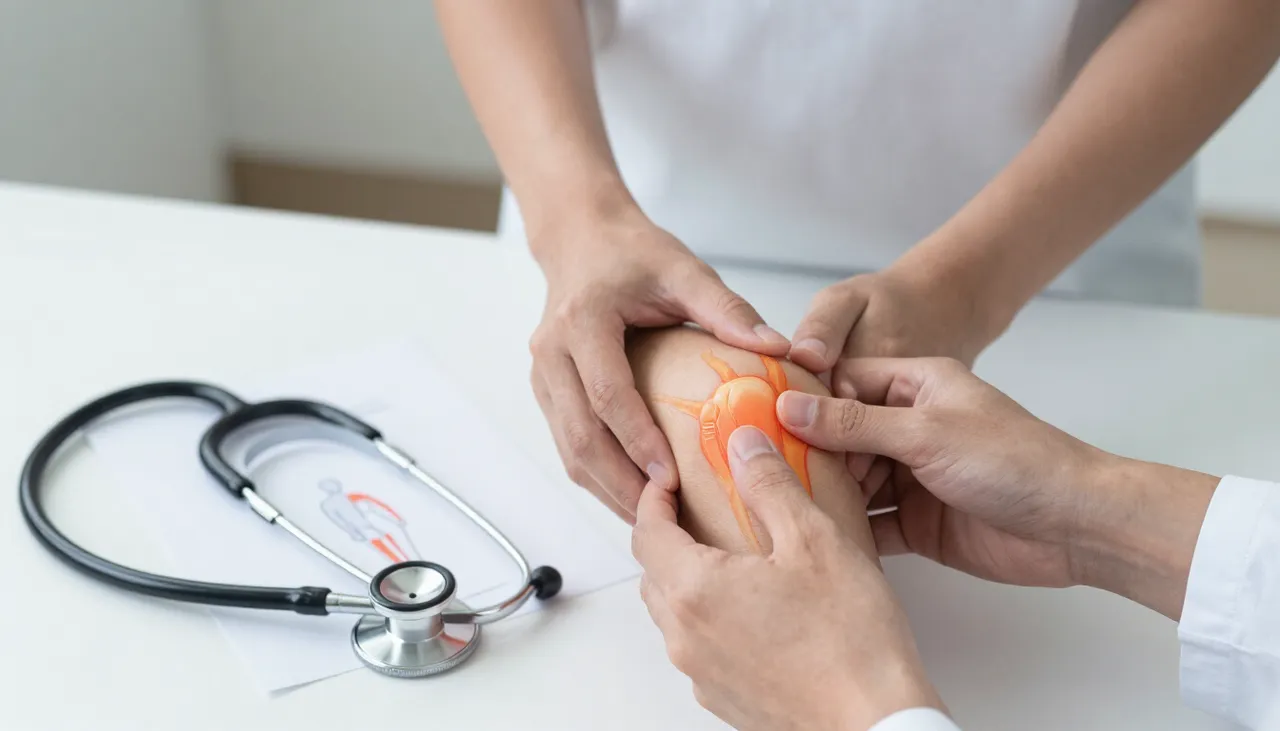
Joint pain is one of the commonest reasons people seek medical care. It can affect a single joint or many, come on after an injury or gradually, and range from a mild ache to pain that prevents movement. “Joint pain” is a symptom, not a diagnosis — the aim of assessment is to work out which structure is hurting and why, because the treatment of a worn knee, an inflamed rheumatoid joint and an acutely gouty toe is completely different. This is the central symptom page; location-specific and cause-specific pages link from here.
Patterns that point to a cause
- Mechanical pain — worse with use and weight-bearing, better with rest, brief morning stiffness. Typical of osteoarthritis and overuse.
- Inflammatory pain — warm, swollen, stiff for an hour or more in the morning, improving with activity. Typical of rheumatoid arthritis and other inflammatory arthritides.
- Crystal pain — sudden, very severe, hot and red, classically the big toe at night. Typical of gout (see Gout and Gout Attacks).
- Infective pain — a single hot, swollen, very tender joint with fever. Needs urgent assessment.
- Soft-tissue pain — around the joint rather than deep in it, often from tendons, ligaments or bursae.
Single versus multiple joints
A single painful joint is often mechanical, post-injury, gout or infection. Pain in many joints, especially symmetrically in the hands and feet, suggests an inflammatory arthritis such as rheumatoid arthritis. See Multiple Joint Pain for the polyarticular pattern and Knee Pain and Shoulder Pain for the two commonest single-joint complaints.
Evaluation and investigations
Evaluation combines a careful history and a hands-on joint examination with selected tests — blood counts and inflammatory markers (ESR, CRP), uric acid, rheumatoid factor and anti-CCP when indicated, and an X-ray of the affected joint. Ultrasound or MRI is arranged when soft-tissue or crystal detail is needed. The tests are chosen from the pattern, not ordered as a blanket panel.
Management overview
Management is cause-specific. Mechanical pain is managed with activity modification, weight management, physical therapy and graded exercise, with short, careful courses of simple pain relief. Inflammatory arthritis needs specific anti-inflammatory and disease-modifying medicines. Gout is managed with anti-inflammatory treatment for flares and uric-acid-lowering treatment over the long term (see Gout). Persistent or severe pain, or any warning features, prompt further assessment.
Warning signs — seek prompt care
- A hot, red, very tender joint with or without fever.
- Joint pain after a significant injury with inability to bear weight or move the joint.
- Rapidly worsening pain or swelling.
- Joint pain with fever, rash or feeling generally unwell.
How we help
Dr. Nayak identifies the pattern behind your joint pain, orders focused tests, and builds a cause-specific plan — from lifestyle and physical therapy to specific medication. Consultations are available in-clinic in Bhubaneswar and over teleconsultation.
Related conditions and patient concerns
Explore more
Related conditions
Explore more
Related services
Take action now
Schedule your consultation today with Dr. Nayak
Don't wait to get the healthcare you deserve. Book your appointment in just a few clicks.