
Joint, Muscle & Rheumatology
Shoulder Pain
Focused on the shoulder — why it hurts, the difference between joint and soft-tissue causes, and how shoulder pain is assessed and managed, including frozen shoulder.
Overview
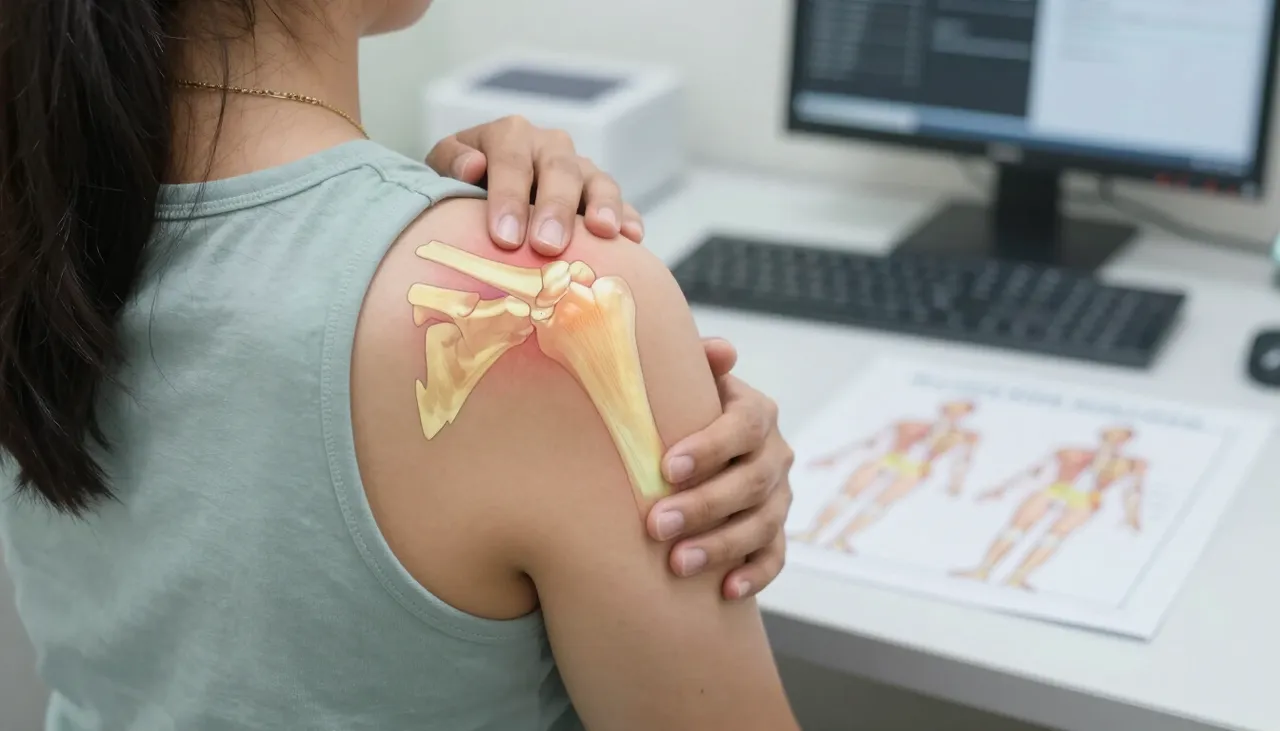
Shoulder pain is very common and often comes from the soft tissues around the joint rather than the joint itself. The shoulder has the widest range of movement of any joint, which makes it prone to wear, inflammation and stiffness. This page focuses on the shoulder; the broader symptom picture is on the Joint Pain page.
Common causes
- Rotator cuff problems — tendinitis or a tear, the commonest cause, with pain on lifting the arm or lying on it at night.
- Frozen shoulder (adhesive capsulitis) — progressive stiffness and pain with severe loss of movement, often over many months.
- Osteoarthritis of the shoulder — less common than in the knee or hip.
- Bursitis — inflammation of the fluid-filled sac over the rotator cuff.
- Referred pain — from the neck (cervical spine) or, less often, the heart or diaphragm.
- Calcific tendinitis — calcium deposits in a tendon causing sudden severe pain.
What the history and examination show
Pain on lifting the arm or lying on the shoulder points to the rotator cuff; a marked loss of both active and passive movement with night pain suggests frozen shoulder; pain radiating from the neck down the arm with numbness points to a cervical cause. Examination tests the individual tendons and measures both active (your own) and passive (the doctor moving your arm) movement — a key distinction, because passive movement is preserved in rotator cuff problems but lost in frozen shoulder.
Evaluation and investigations
X-ray of the shoulder is the first-line test, mainly to exclude arthritis, calcific deposits and bony injury. Ultrasound or MRI is arranged when a rotator cuff tear or soft-tissue detail is needed. When the pain is referred from the neck, the cervical spine is assessed separately (see Neck Pain).
Management overview
Most shoulder pain is managed without surgery — rest from aggravating activity, physical therapy to restore movement and strengthen the rotator cuff, and short careful courses of simple pain relief. Frozen shoulder often needs a structured stretching programme and, in selected cases, an injection or manipulation. Rotator cuff tears that fail to improve or are large may need orthopaedic assessment.
Lifestyle and activity
Avoiding overhead and repetitive lifting while the shoulder settles, then gradually restoring movement with guided exercises, is the core of recovery. For desk workers, ergonomic adjustments to the shoulder and neck reduce strain. Diabetes is a recognised risk factor for frozen shoulder, so sugar control is part of the plan where relevant (see Diabetes & Metabolic Health).
Warning signs — seek prompt care
- Shoulder pain after a fall or injury with inability to move the arm.
- Sudden severe pain with marked deformity.
- Shoulder pain with chest pain, breathlessness or sweating — emergency (possible heart problem).
How we help
Dr. Nayak identifies whether your shoulder pain is from the joint, the rotator cuff or the neck, orders the right imaging, and builds a non-surgical plan — with orthopaedic referral when needed. Consultations are available in-clinic in Bhubaneswar and over teleconsultation.
Related conditions and patient concerns
Explore more
Related conditions
Explore more
Related services
Take action now
Schedule your consultation today with Dr. Nayak
Don't wait to get the healthcare you deserve. Book your appointment in just a few clicks.