Joint, Muscle & Rheumatology
Gout Attacks
Focused on the acute gout flare — the typical attack, what triggers it, how it is treated early, and how repeated attacks are prevented over the long term.
Overview
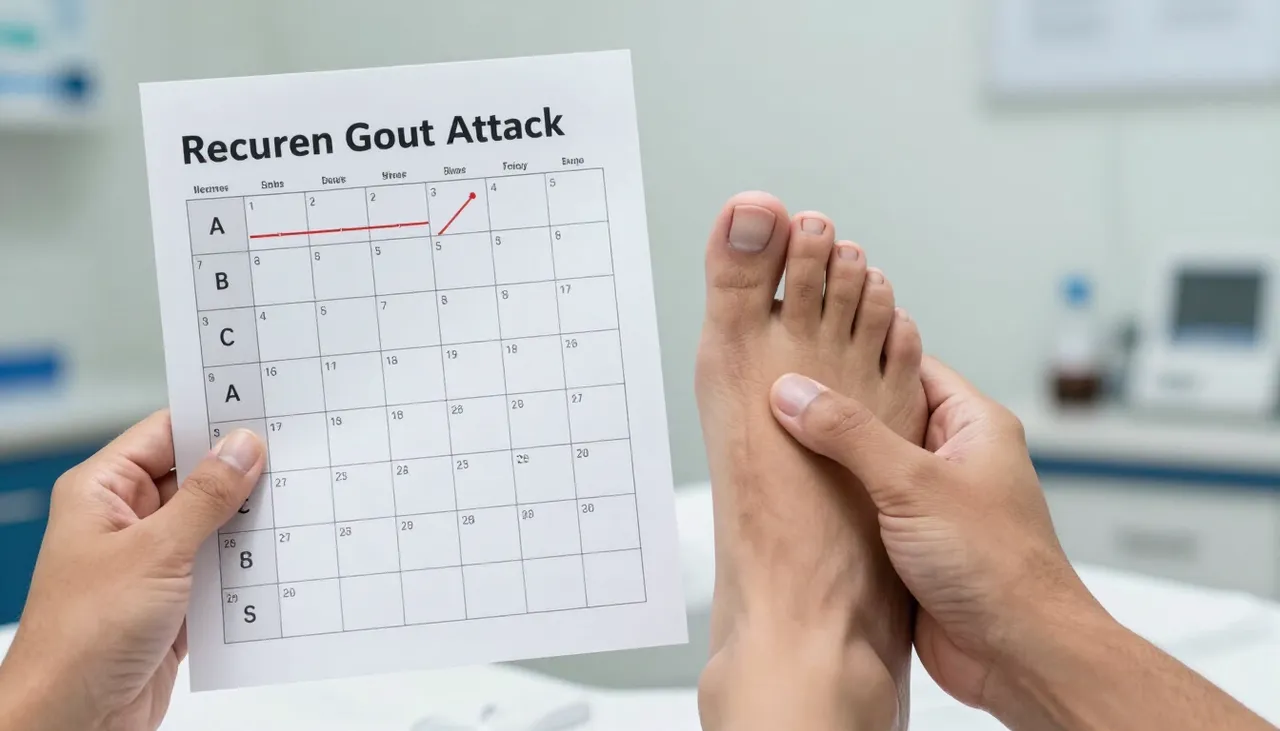
A gout attack is the acute flare of gout — a sudden, severe joint inflammation caused by uric-acid crystals. Attacks often come on overnight, peak within a day, and classically affect the big toe, though the ankle, knee, wrist and fingers can be involved. This page focuses on the acute attack; the disease and its long-term treatment are on the Gout page, and the blood-result angle on the High Uric Acid page.
What a typical attack looks like
- Rapid onset — often overnight — of severe pain in a single joint.
- The joint becomes red, hot, swollen and exquisitely tender, even to a bedsheet.
- Classically the big toe (podagra), but ankles, knees, wrists and fingers are common.
- May be accompanied by mild fever.
- Usually settles over days to a week, then the joint returns to normal between attacks.
Common triggers
Attacks can be triggered by alcohol (especially beer), purine-rich meals (red meat, organ meat, shellfish), sugary drinks, dehydration, fasting, recent illness or surgery, and starting or stopping uric-acid-lowering medication. Recognising your own triggers helps prevent attacks.
Treatment of an acute attack
The earlier an anti-inflammatory medicine is started in a flare, the better it works. Treatment options include anti-inflammatory medicines (NSAIDs), colchicine, or a short course of corticosteroid — chosen based on the individual, other conditions (especially kidney disease), and other medicines. Rest, ice and adequate hydration help. Aspirin should not be used to treat a gout attack. See Gout.
Preventing further attacks
Once attacks have occurred, long-term uric-acid-lowering treatment is usually started to prevent recurrence and joint damage, with acute-flare cover during the early months. Lifestyle measures — reducing alcohol, sugary drinks and purine-rich foods, weight management and hydration — support the medication. See Gout and High Uric Acid.
When a hot joint might not be gout
A single hot, swollen, very tender joint can also be a joint infection, which needs urgent care. If there is high fever, feeling very unwell, or the joint is extremely painful to any movement, prompt assessment is needed rather than assuming it is gout. See Joint Swelling.
Warning signs — seek prompt care
- A hot, red, very swollen joint with high fever or feeling very unwell — possible infection, urgent.
- Attacks becoming more frequent, lasting longer, or involving several joints.
- An attack that does not settle with the usual treatment.
How we help
Dr. Nayak treats acute gout attacks early with the right anti-inflammatory option for your kidney and overall health, and builds a long-term plan to prevent further attacks. Consultations are available in-clinic in Bhubaneswar and over teleconsultation.
Related conditions and patient concerns
Explore more
Related conditions
Explore more
Related services
Take action now
Schedule your consultation today with Dr. Nayak
Don't wait to get the healthcare you deserve. Book your appointment in just a few clicks.