
Joint, Muscle & Rheumatology
Back Pain
Why the back hurts, the difference between mechanical and serious causes, the warning signs that need prompt assessment, and how back pain is managed conservatively.
Overview
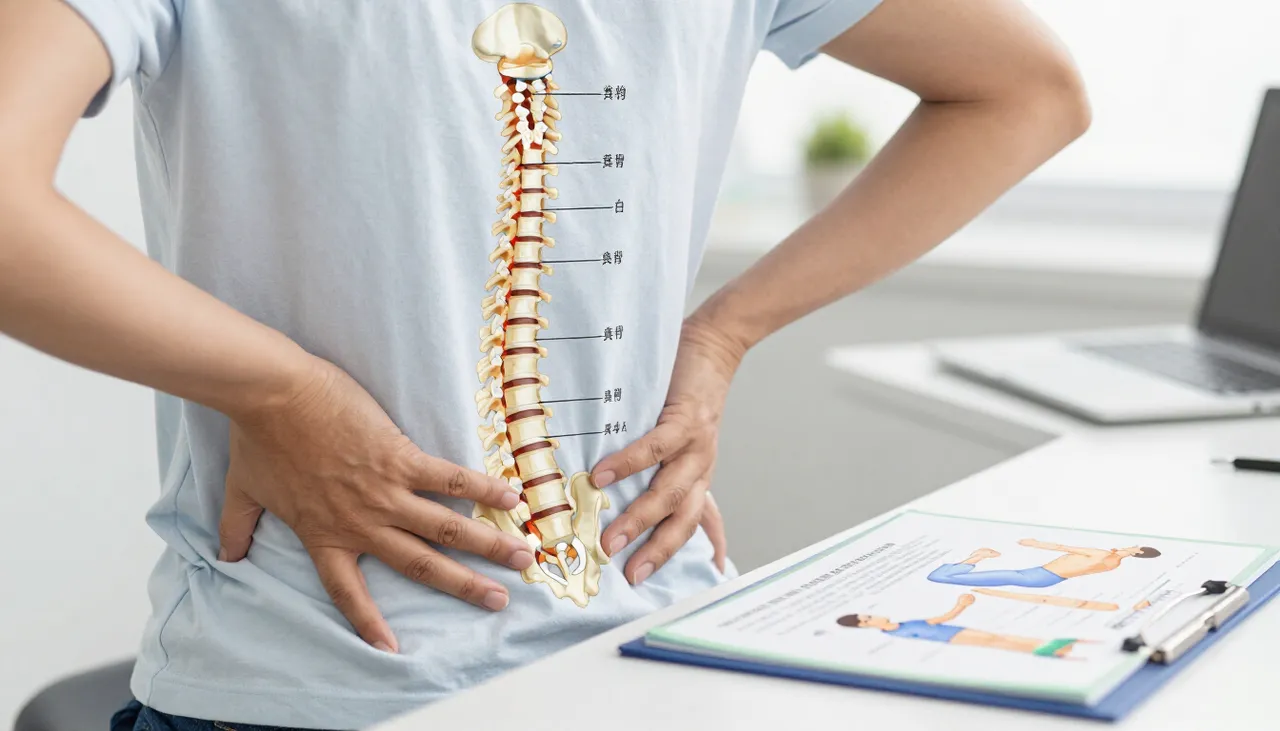
Back pain — especially lower-back pain — is one of the commonest reasons people seek care. Most episodes are mechanical, arising from the muscles, ligaments, joints or discs of the spine, and most settle with time and gradual return to movement. A smaller proportion signals a serious cause needing prompt assessment. This page focuses on the back; neck pain is covered separately on the Neck Pain page.
Common causes
- Mechanical lower-back pain — muscle or ligament strain, poor posture, prolonged sitting, heavy lifting.
- Disc problems — a prolapsed (slipped) disc pressing on a nerve, causing leg pain or sciatica.
- Facet joint (spinal joint) wear — osteoarthritis of the spine.
- Spondylolisthesis — one vertebra slipping forward on another.
- Inflammatory back pain — ankylosing spondylitis, with prolonged morning stiffness and improvement with activity.
- Serious causes — infection, fracture, or cancer spread to the spine (rare but important).
Mechanical versus serious back pain
Mechanical pain is usually related to movement and posture, varies through the day, and improves with rest and simple care. Features that suggest a serious cause — and prompt assessment — include pain with numbness or weakness in the legs, loss of bladder or bowel control, a history of cancer, recent serious infection, unexplained weight loss, fever, or pain that is constant and unrelated to position. These “red flags” are listed again below.
Evaluation and investigations
Most back pain needs no imaging at first — the history and examination are enough, and early X-rays rarely change management. Imaging (X-ray, MRI) is arranged when red flags are present, when nerve symptoms are found, or when pain persists beyond the expected recovery period. Blood tests are added when an inflammatory or infective cause is suspected.
Management overview
The cornerstone of mechanical back pain is staying active (rather than prolonged bed rest), activity modification, physical therapy, and short careful courses of simple pain relief. Weight management reduces spinal load (see Obesity & Weight Management). Specific causes are treated specifically — an inflammatory arthritis needs rheumatology input, nerve compression may need specialist assessment, and infection or fracture need urgent care.
Lifestyle and activity
Core-strengthening and back exercises, good lifting technique, an ergonomic workspace, regular walking, and avoiding prolonged sitting all prevent recurrence. For desk workers, standing up regularly and adjusting the chair and screen matter more than any single exercise.
Warning signs — seek prompt care
- Back pain with numbness, weakness or loss of sensation in the legs.
- Loss of bladder or bowel control or numbness around the groin — emergency.
- Back pain with fever or recent infection.
- Constant, severe pain unrelated to position, especially at night.
- Back pain with a history of cancer or unexplained weight loss.
- Back pain after a serious fall or accident.
How we help
Dr. Nayak identifies whether your back pain is mechanical or needs investigation, orders imaging only when warranted, and builds a conservative plan — with prompt referral when red flags are present. Consultations are available in-clinic in Bhubaneswar and over teleconsultation.
Related conditions and patient concerns
Explore more
Related conditions
Explore more
Related services
Take action now
Schedule your consultation today with Dr. Nayak
Don't wait to get the healthcare you deserve. Book your appointment in just a few clicks.