Kidney Health
Reduced Kidney Function
What a lower-than-expected kidney function result means, how it is confirmed, and when it is a temporary change versus established kidney disease.
Overview
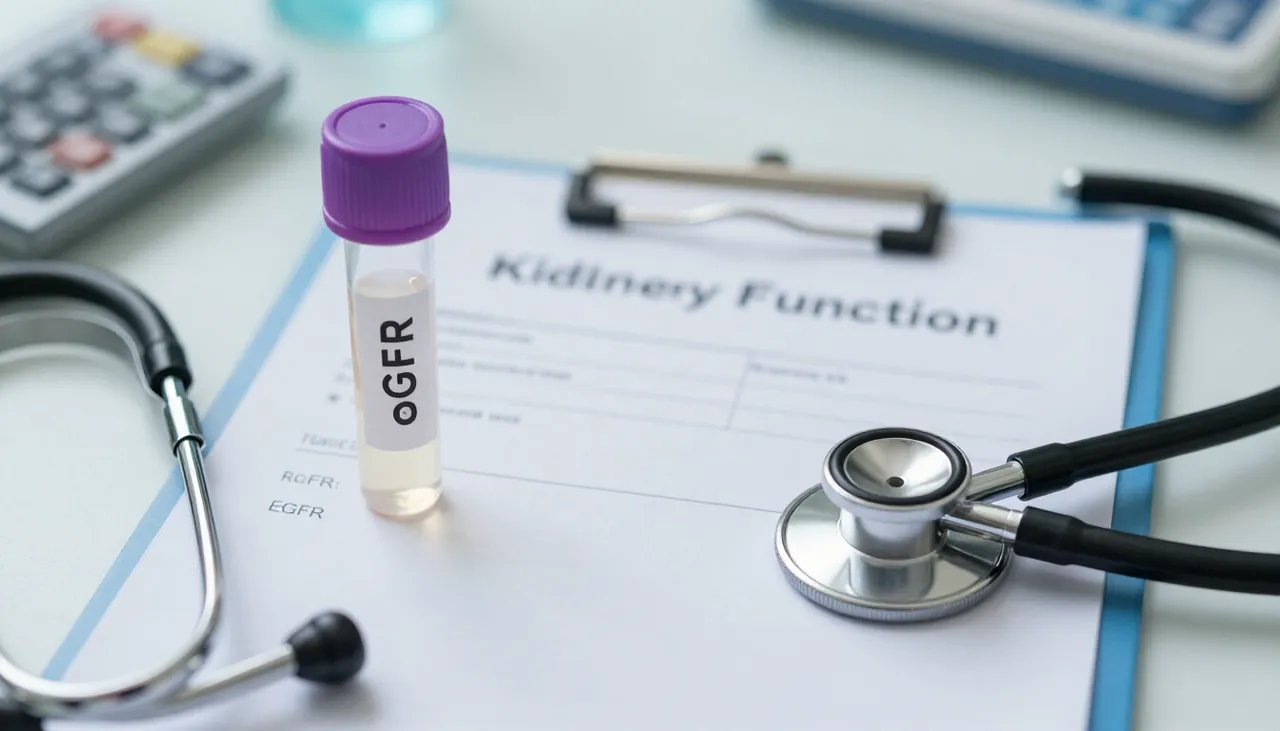
“Reduced kidney function” usually means an eGFR below the expected range for your age, or a creatinine above it, found on a blood test. It is a description of a test result, not a diagnosis in itself — the next step is always to confirm whether the change is real and persistent, and then to find the cause. A single low reading can be caused by dehydration, a recent medicine, a high-meat meal before the test, or a muscle-related factor, and may return to normal on repeat testing. This page focuses on what the result means and how it is worked up; the disease itself is covered on the Chronic Kidney Disease page.
Temporary versus persistent reduction
Kidney function is considered genuinely reduced only when the change persists for at least three months. A fall that recovers within days or weeks is usually acute rather than chronic — for example, dehydration, a kidney-irritating medicine, a urinary blockage, or an infection. Distinguishing the two is the first and most important step, because acute causes are often reversible with prompt treatment, while chronic changes need long-term protection. Comparing today’s result with any older blood tests is one of the simplest ways to tell.
Common causes
- Dehydration or low fluid intake before the test.
- Certain medicines, especially over-the-counter painkillers.
- Diabetes or high blood pressure (the commonest persistent causes).
- A urinary blockage, such as an enlarged prostate or a stone.
- A recent illness, infection or contrast dye exposure.
- Naturally lower muscle mass, which can make eGFR look lower than it is.
Evaluation and investigations
After a repeat test in well-hydrated, controlled conditions, evaluation typically includes urine routine and ACR, electrolytes, blood sugar or HbA1c and a lipid profile, a complete blood count, and an ultrasound of the kidneys to look for obstruction, stones or structural change. Older results are reviewed to judge whether the change is new or long-standing.
Management overview
If the reduction is temporary, removing the trigger (rehydration, stopping an offending medicine, treating an infection or blockage) is often enough. If it is persistent, management follows the cause-directed plan described on the Chronic Kidney Disease page — blood pressure and sugar control, protective medicines, and avoidance of further kidney injury.
Follow-up and monitoring
A repeat test is usually arranged within a few weeks to confirm the trend. If function is stable and normal, routine periodic monitoring is sufficient; if it remains reduced, a structured monitoring plan is set up. See Kidney Health Monitoring.
Warning signs — seek prompt care
- A sudden, large rise in creatinine or fall in urine output.
- Swelling with breathlessness.
- Persistent vomiting, drowsiness or confusion with reduced function.
How we help
Dr. Nayak confirms whether the reduction is real and persistent, identifies the cause, and builds a plan — from simple re-testing and trigger removal to long-term protection. Consultations are available in-clinic in Bhubaneswar and over teleconsultation.
Related conditions and patient concerns
Explore more
Related conditions
Explore more
Related services
Take action now
Schedule your consultation today with Dr. Nayak
Don't wait to get the healthcare you deserve. Book your appointment in just a few clicks.