
Kidney Health
Kidney Health Monitoring
How kidney function and urine are monitored over time — what each test watches for, how often it is done, and why trend matters more than any single reading.
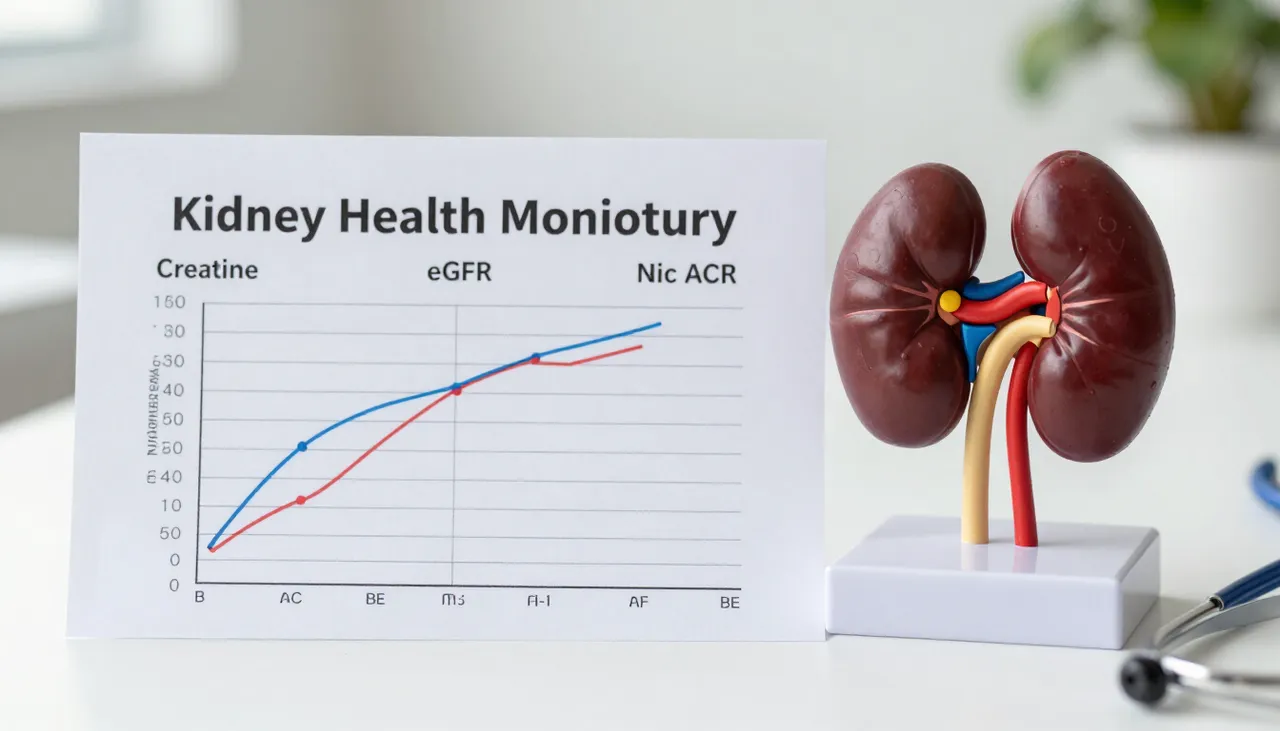
Overview
Kidney health is monitored over months and years, not single readings, because kidney disease is silent and the trend tells you far more than any one result. Monitoring has two purposes: to catch early changes in people at risk (diabetes, high blood pressure, family history), and to confirm stability or signal the need to intensify treatment in those with established kidney disease. This page explains the schedule and what each test is watching for; the disease itself is covered on the Chronic Kidney Disease page.
What is monitored
- Serum creatinine and eGFR — overall filtering capacity and its trend.
- Urine albumin-to-creatinine ratio (ACR) — the earliest sign of filter leak.
- Blood pressure — the single most important modifiable protector of the kidneys.
- Blood sugar or HbA1c and lipid profile — the metabolic drivers of kidney damage.
- Electrolytes (potassium, sodium, bicarbonate) — kidney-handling balance.
- Complete blood count — the anaemia that can accompany chronic kidney disease.
- Ultrasound of the kidneys — when structure or obstruction needs checking.
How often
The frequency depends on risk and stage. People with diabetes or high blood pressure and normal kidneys usually have an annual creatinine/eGFR and urine ACR. Those with early albuminuria or a mild fall in eGFR are monitored every 6–12 months. Those with established chronic kidney disease are monitored every 3–6 months, or more often if progressing. The schedule is tailored to the individual rather than applied uniformly.
Why trend matters
A single creatinine or eGFR can be affected by hydration, a recent meal, a medicine or muscle mass. The trend over several readings is what reveals real change. Comparing today’s result with older blood tests is one of the simplest and most useful parts of kidney monitoring, which is why keeping past reports matters.
What changes the plan
A rising creatinine, falling eGFR, increasing albumin leak, or blood pressure drifting above target all signal the need to intensify treatment. Conversely, a stable trend with reducing albumin leak reassures that the current plan is working. Monitoring is therefore not just observation — it drives the treatment decisions.
Warning signs — seek prompt care
- A sudden, large rise in creatinine or fall in eGFR between tests.
- A new, heavy albumin leak with swelling.
- Reduced urine output or very high blood pressure.
How we help
Dr. Nayak sets a monitoring schedule that fits your risk and stage, reads the trend rather than isolated numbers, and adjusts the plan as the trend changes. Consultations are available in-clinic in Bhubaneswar and over teleconsultation.
Related conditions and patient concerns
Explore more
Related conditions
Explore more
Related services
Take action now
Schedule your consultation today with Dr. Nayak
Don't wait to get the healthcare you deserve. Book your appointment in just a few clicks.