
Fever & Infectious Diseases
Dengue Fever
Mosquito-borne dengue — high fever, severe body ache and rash, falling platelets, the critical phase, warning signs and monitoring.
Overview
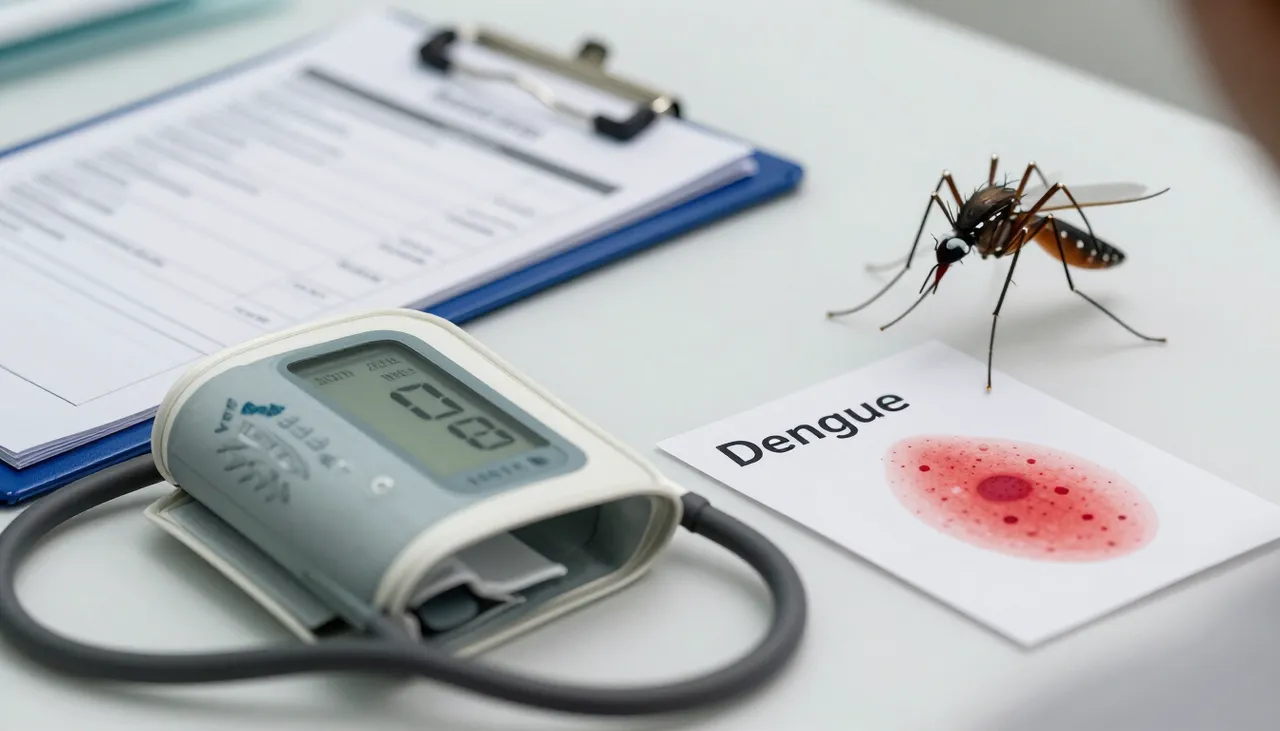
Dengue is a mosquito-borne viral illness common in India, especially during and after the monsoon. It causes high fever, severe muscle and joint pain (“breakbone” pain), headache, pain behind the eyes, and often a rash. Most people recover with careful supportive care, but a minority develop severe dengue with plasma leakage, low platelets and bleeding — which needs hospital care. Early recognition and monitoring are key.
Symptoms
- Sudden high fever (often 102–104°F).
- Severe headache, typically with pain behind the eyes.
- Severe muscle and joint pain.
- Nausea, vomiting and loss of appetite.
- A flushed face and a measles-like rash, often appearing as the fever settles.
- Mild bleeding — gums, nose, or skin spots — in some cases.
The phases of dengue
Dengue has a febrile phase, then a critical phase around the time the fever drops (usually days 3–7), when fluid can leak into tissues and the platelet count may fall. This is when warning signs are most likely. A recovery phase follows. The drop in fever does not always mean improvement — it is exactly when careful monitoring matters most.
Evaluation and investigations
- Complete blood count — platelet count and haematocrit (repeated daily during the critical phase).
- Dengue NS1 antigen test (early) and IgM antibody (later).
- Liver function tests, as liver involvement is common.
- Blood pressure and urine output monitoring.
Management
There is no specific antiviral for dengue. Management is supportive: adequate oral fluids (or intravenous fluids if needed), paracetamol for fever, and close monitoring of platelets, haematocrit, blood pressure and urine output. Aspirin and NSAIDs (like ibuprofen) are avoided because of bleeding risk. Severe dengue — with bleeding, very low platelets, plasma leakage, low blood pressure or organ involvement — needs urgent hospital care.
Warning signs — seek urgent care
- Severe abdominal pain or persistent vomiting.
- Bleeding gums, nosebleeds, blood in vomit or stools, or a spreading rash.
- Difficulty breathing or restlessness.
- Cold clammy limbs, low blood pressure, or reduced urine output.
- Drowsiness, confusion or seizures.
- A sudden drop in platelets with rising haematocrit.
How we help
Dr. Nayak suspects dengue early, confirms it with the right tests at the right stage, and manages with careful fluid balance and daily monitoring — referring to hospital immediately when warning signs appear. Consultations are available in-clinic in Bhubaneswar and over teleconsultation.
Related conditions and patient concerns
Explore more
Related conditions
Explore more
Related services
Take action now
Schedule your consultation today with Dr. Nayak
Don't wait to get the healthcare you deserve. Book your appointment in just a few clicks.