
Skin Problems
Skin Rash
The central general page for any new or changing rash — what a rash is, the common patterns, how it is assessed, and when it needs prompt or specialist care.
Overview
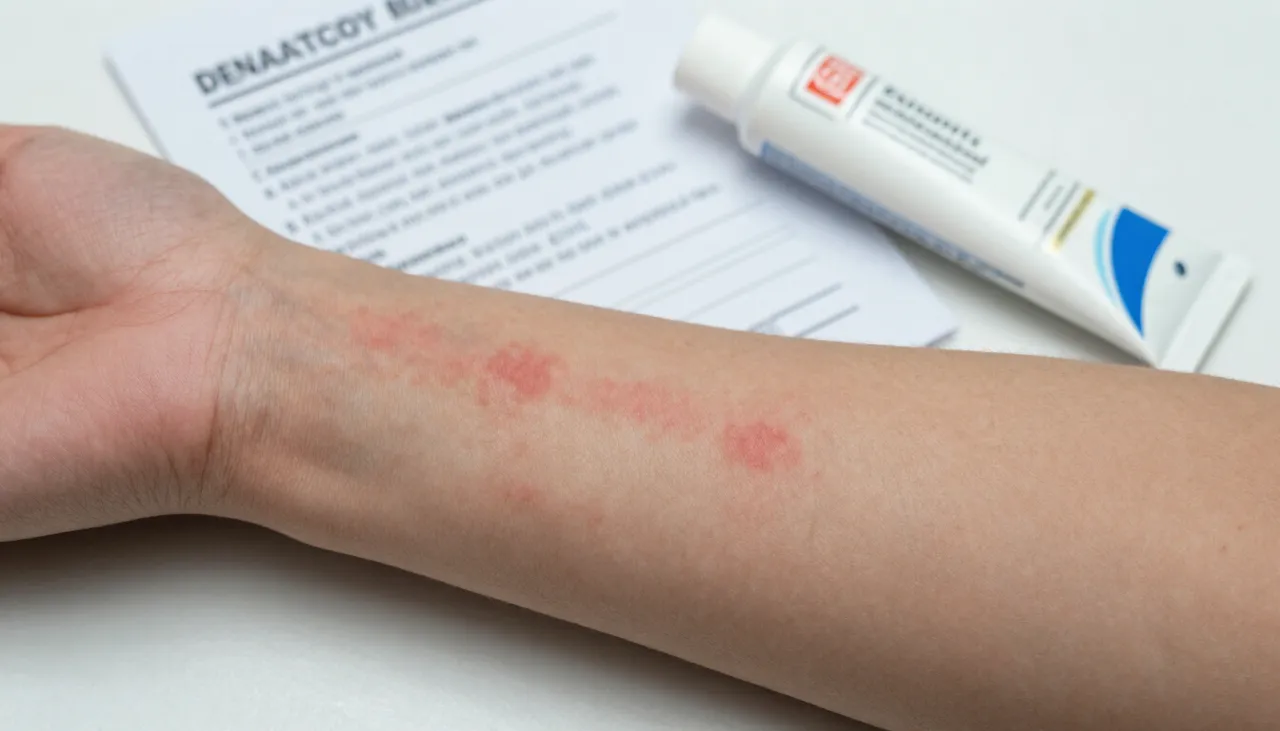
A rash is a general term for any visible change in the skin’s appearance — redness, spots, bumps, blisters, scaling, or discolouration — that is new or changing. Because “rash” describes a sign rather than a diagnosis, the assessment focuses on the pattern, distribution, speed of onset, and any accompanying symptoms such as itching, pain or fever. This is the central general page for rashes; specific rash-related conditions — allergic rashes, hives, fungal infections, rashes with fever, and shingles — each have their own pages and link from here.
Common types and patterns
- Red, flat, blotchy rashes — often allergic, viral, or drug-related.
- Raised, itchy welts that come and go quickly — hives / urticaria (see Hives / Urticaria).
- Ring-shaped, scaly, slowly expanding patches — fungal infection / ringworm (see Fungal Skin Infection, Ringworm).
- Blisters on one side of the body following a nerve line — shingles (see Shingles / Herpes Zoster).
- Dry, red, itchy, scaling patches — eczema / dermatitis (see Eczema / Dermatitis).
- Rash appearing together with fever — often an infection (see Skin Rash with Fever).
Common causes
Rashes have many causes: allergies (to food, a product, a plant, or a medicine), infections (viral, bacterial, fungal), contact with an irritant, eczema, heat and sweat, autoimmune conditions, and internal illnesses. A new rash that starts soon after starting a medicine should always be reviewed, as drug rashes can range from mild to serious. See Allergic Skin Rash.
Evaluation and investigations
Most rashes are diagnosed from the history and examination. When the cause is unclear or an internal condition is suspected, blood tests (complete blood count, blood sugar, thyroid, kidney and liver function) and, occasionally, a skin swab, scraping or biopsy help. A rash with fever or rapid spread needs prompt assessment. See Abnormal Test Results.
Management overview
Treatment follows the cause — antihistamines and avoidance for allergic rashes, antifungals for fungal rashes, antibiotics for bacterial infection, moisturisers and topical anti-inflammatories for eczema, and stopping an offending medicine for a drug rash. Cool compresses and gentle skin care soothe many rashes while the cause is addressed.
Warning signs — seek prompt care
- A rash with high fever, rapid spread, blistering or skin breakdown — urgent.
- A rash with swelling of the lips, tongue or throat, or breathlessness — possible severe allergy, emergency.
- A painful, hot, spreading red area — possible cellulitis, urgent.
- A rash that started after a new medicine and is spreading — needs prompt review.
How we help
Dr. Nayak assesses the rash pattern, identifies the likely cause, begins appropriate treatment, and looks for any underlying medical condition. When a rash needs dermatology procedures or specialised therapy, he refers promptly. Consultations are available in-clinic in Bhubaneswar and over teleconsultation.
Related conditions and patient concerns
Explore more
Related conditions
Explore more
Related services
Take action now
Schedule your consultation today with Dr. Nayak
Don't wait to get the healthcare you deserve. Book your appointment in just a few clicks.