
Joint, Muscle & Rheumatology
High Uric Acid
Focused on the raised uric-acid blood result — what it means, when it leads to gout, the causes, and how it is assessed and managed. (Also covers “hyperuricaemia”, which is the same condition.)
Overview
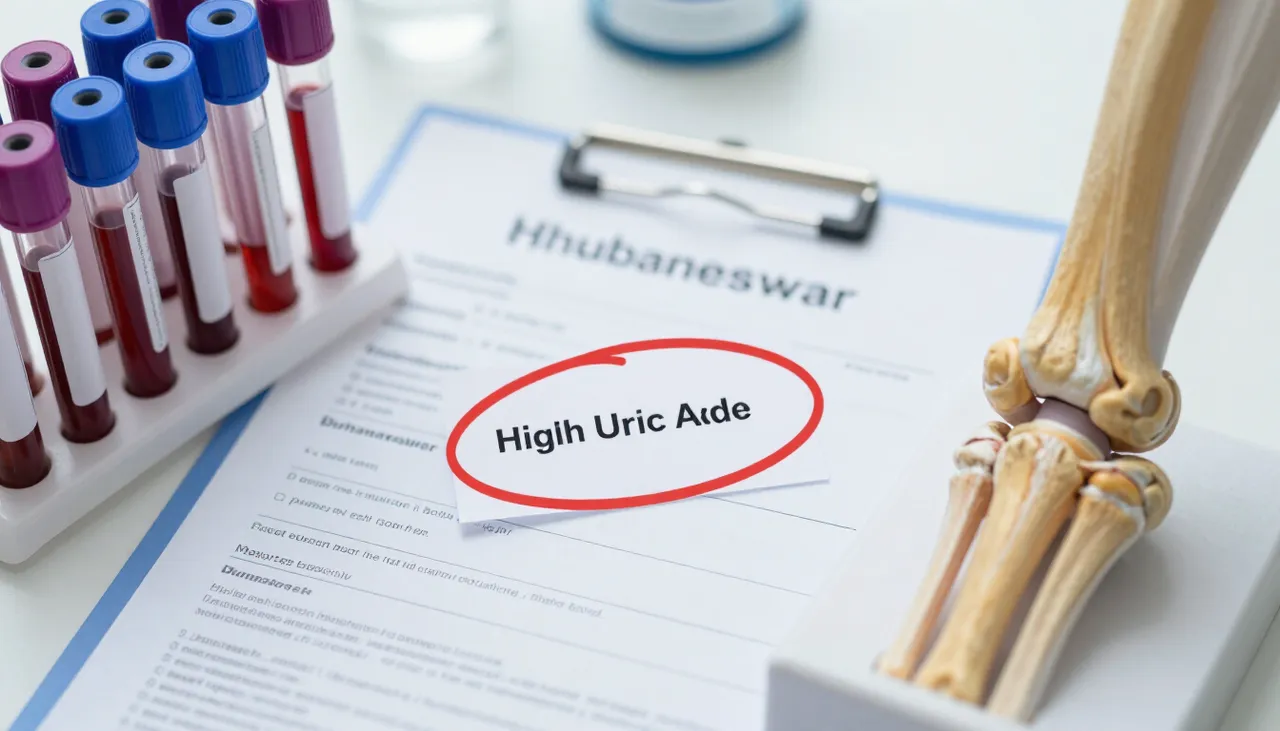
A high uric acid level (hyperuricaemia) means there is more uric acid in the blood than expected. Uric acid is a normal waste product from purine breakdown, removed by the kidneys. A high level does not by itself mean gout — most people with a raised uric acid never have an attack — but the higher and longer the level stays raised, the greater the chance of gout and uric-acid kidney stones. “High uric acid” and “hyperuricaemia” describe the same thing, so this single page covers both; there is no separate article for hyperuricaemia.
When a high level leads to gout
Gout happens when uric acid forms crystals in joints. Many people with a high level never form crystals and never have gout, so a high result alone is not a diagnosis of gout. The decision to treat is based on whether there have been attacks, whether there are tophi or stones, and the level itself — not on the number alone. See Gout and Gout Attacks.
Common causes
- Reduced kidney removal of uric acid — the commonest cause, often with kidney disease (see Kidney Health).
- Diuretics (water tablets) and certain other medicines.
- Obesity and the metabolic syndrome (see Obesity & Weight Management).
- High intake of purine-rich foods — red meat, organ meat, shellfish.
- Alcohol, especially beer and spirits.
- Sugary drinks (fructose raises uric acid).
- Overproduction of uric acid in rare metabolic or blood conditions.
Evaluation and investigations
Evaluation confirms the level (repeated on a different day, since a single reading can be affected by a recent meal, alcohol or dehydration), and looks for the cause and any consequences — kidney function, blood sugar, lipid profile, blood pressure, and a review of medicines. A history of any joint attacks is the key to deciding whether treatment is needed. See Abnormal Test Results.
Management overview
A high uric acid without any attacks is often managed with lifestyle measures first — reducing alcohol, sugary drinks and purine-rich foods, weight management, hydration, and reviewing culprit medicines. Uric-acid-lowering medication is started when there have been gout attacks, tophi, uric-acid stones, or a very high level with risk factors — and is then adjusted to a target level. See Gout for the full treatment plan.
Lifestyle and activity
The same lifestyle measures that prevent gout lower uric acid — reducing beer, spirits, sugary drinks, red meat, organ meat and shellfish; drinking plenty of water; achieving a healthy weight; and regular activity. Low-fat dairy may help lower uric acid.
Warning signs — seek prompt care
- A sudden hot, swollen, very painful joint — possible gout attack (see Gout Attacks).
- High uric acid with known kidney disease and new swelling or reduced urine.
- Severe flank or groin pain — possible kidney stone.
How we help
Dr. Nayak interprets your uric-acid result in context, identifies the cause, and builds a plan — from lifestyle measures to uric-acid-lowering medication when warranted — coordinated with kidney and metabolic care. Consultations are available in-clinic in Bhubaneswar and over teleconsultation.
Related conditions and patient concerns
Explore more
Related conditions
Explore more
Related services
Take action now
Schedule your consultation today with Dr. Nayak
Don't wait to get the healthcare you deserve. Book your appointment in just a few clicks.