
Skin Problems
Acanthosis Nigricans
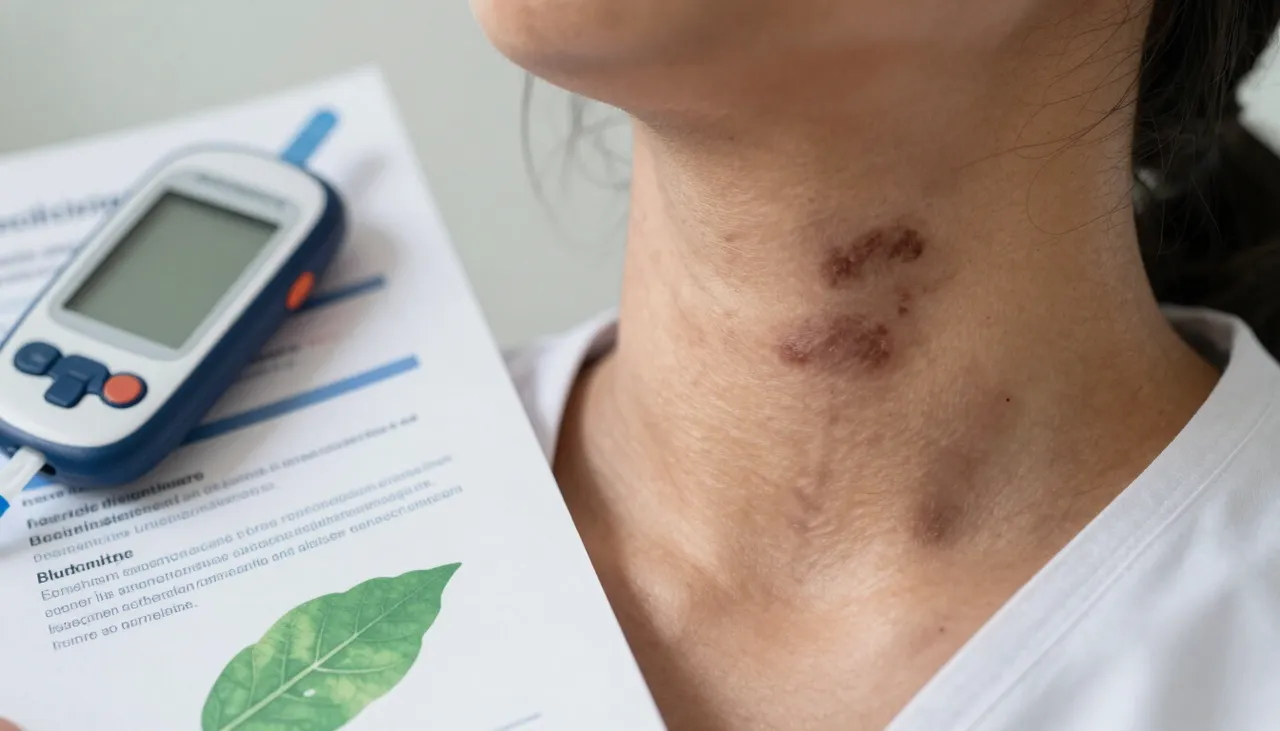
Dark, velvety thickening in the skin folds — a visible marker of insulin resistance, strongly linked with prediabetes, type 2 diabetes and obesity.
Overview
Acanthosis nigricans is a skin change in which the skin in the folds — the back of the neck, armpits, groin, and sometimes the knuckles or under the breasts — becomes dark, thick, and velvety. It is not an infection or a dirt that can be scrubbed away. It is a visible marker of insulin resistance, the same process that underlies prediabetes and type 2 diabetes, and is particularly common in people who are overweight or obese. Recognising it is valuable because it often appears before diabetes is diagnosed and offers a chance to act early.
Why it matters
Because acanthosis nigricans reflects insulin resistance, it frequently goes hand in hand with prediabetes, type 2 diabetes, abdominal obesity, high blood pressure, and fatty liver — together called metabolic syndrome. Seeing this skin change is a good reason to check blood sugar, weight, blood pressure, and cholesterol, and to begin lifestyle measures that can prevent or delay diabetes. See Diabetes & Metabolic Health, Obesity & Weight Management, and Hypertension & Cardiovascular Risk.
Who gets it
- People who are overweight or obese, especially with abdominal fat.
- People with prediabetes or type 2 diabetes.
- People with a family history of diabetes.
- Certain ethnic groups, including South Asians, at higher risk at lower body weights.
Evaluation and investigations
Evaluation examines the skin and arranges blood sugar, HbA1c, a lipid profile, and liver function, alongside weight and blood pressure assessment. The aim is to identify insulin resistance and any related metabolic condition early. See Abnormal Test Results and Liver & Fatty Liver Health.
Management overview
The skin change itself is not usually treated directly; it often lightens as the underlying insulin resistance improves. Management focuses on weight loss, diet and activity, and treating prediabetes or diabetes when present. Addressing obesity and metabolic risk is central. See Obesity & Weight Management and Diabetes & Metabolic Health.
Warning signs — seek prompt care
- Acanthosis nigricans with thirst, frequent urination or weight change — check blood sugar promptly.
- Rapid onset of widespread, severe skin thickening with weight loss — needs evaluation.
How we help
Dr. Nayak recognises acanthosis nigricans as a marker of insulin resistance, checks blood sugar and metabolic risk, and builds a weight, diet and lifestyle plan — treating prediabetes or diabetes when found. Consultations are available in-clinic in Bhubaneswar and over teleconsultation.
Related conditions and patient concerns
Explore more
Related conditions
Explore more
Related services
Take action now
Schedule your consultation today with Dr. Nayak
Don't wait to get the healthcare you deserve. Book your appointment in just a few clicks.