
Swelling & Oedema
Medication-related Swelling
Swelling that may be caused or worsened by a medicine — the common culprits, why a medical review matters, and why prescribed medicines should not be stopped independently.
Overview
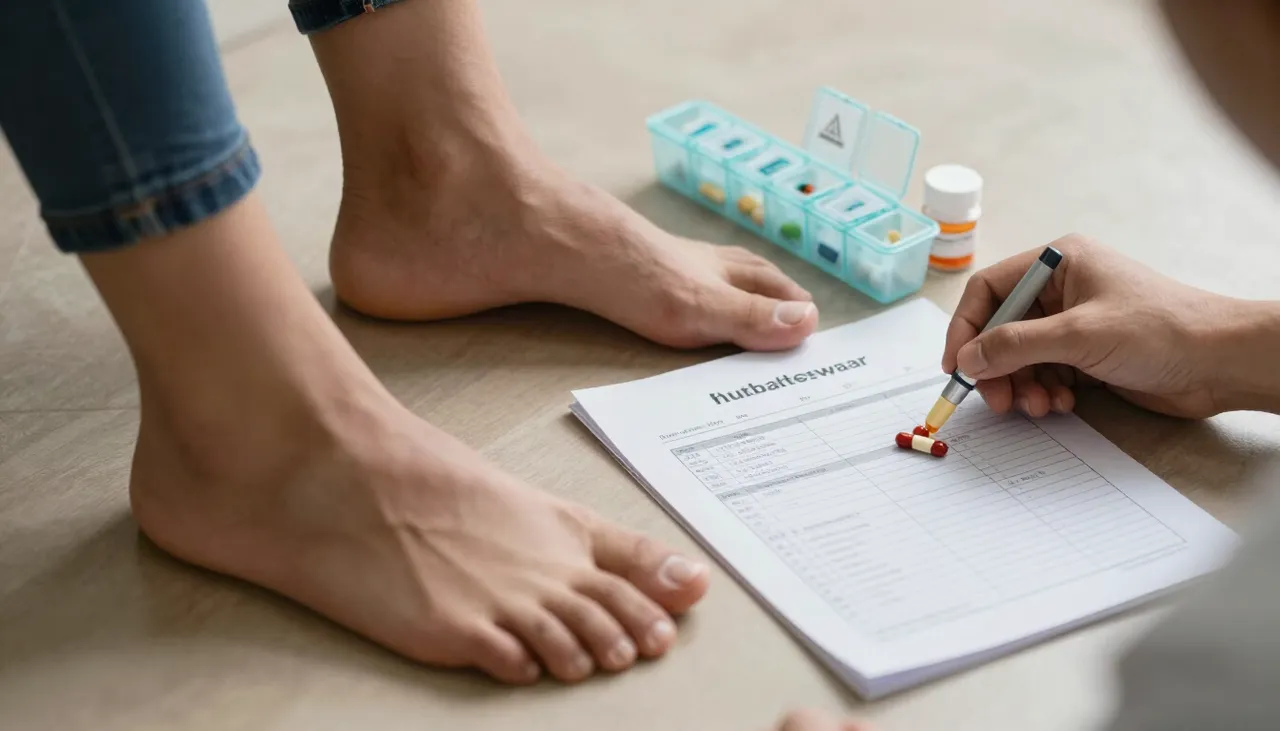
Some medicines can cause or worsen swelling as a side effect — most commonly calcium-channel blockers (a type of blood-pressure medicine), steroids, certain painkillers, hormone therapy, and some diabetes medicines. Medication-related swelling is typically both-sided and dependent, and it often appears after a medicine is started or its dose is changed. The right response is a medical review to confirm the link and adjust the treatment safely — not stopping a prescribed medicine independently, which can be harmful. This page covers the medication-related angle; the underlying conditions are covered on the linked pages.
Common possible culprits
- Calcium-channel blockers (blood-pressure medicines) — a common cause of ankle swelling.
- Steroids and related medicines.
- Certain non-steroidal anti-inflammatory painkillers (NSAIDs).
- Hormone therapy and oral contraceptives.
- Some diabetes medicines.
- Certain medicines used for nerve or mood conditions.
Symptoms and associated features
Both-sided ankle or leg swelling that appeared after a medicine was started or its dose increased is the typical pattern. The swelling is usually painless and dependent. Features that warrant assessment beyond a medication review include breathlessness, one-sided swelling, reduced urine output, or swelling that does not settle after the medicine is reviewed.
Evaluation and investigations
Evaluation combines a careful review of all current medicines (including over-the-counter and herbal products) with an examination and targeted tests to exclude other causes — kidney function, urine ACR, serum albumin, complete blood count, and a heart marker where indicated. See Abnormal Test Results.
Management overview
Management is a medical review: confirming the link, adjusting the dose, switching to an alternative where appropriate, or treating the swelling while the medicine is continued when it is essential. Prescribed medicines are not stopped independently — some must not be stopped suddenly, and the decision is made with the doctor. Other causes are treated if found.
Follow-up and monitoring
Follow-up confirms the swelling is settling after any medicine adjustment and that the underlying condition remains controlled. Persistent swelling despite review is reassessed for other causes.
Warning signs — seek urgent care
- Swelling with breathlessness, especially on lying flat — urgent.
- Sudden one-sided leg swelling with pain or warmth — possible clot; urgent.
- Swelling with reduced urine output — urgent.
- Swelling with chest pain or fainting — emergency.
How we help
Dr. Nayak reviews all current medicines, confirms whether a medicine is the cause, adjusts treatment safely, and checks for other causes with targeted tests. Consultations are available in-clinic in Bhubaneswar and over teleconsultation. Do not stop prescribed medicines on your own before the review.
Related conditions and patient concerns
Explore more
Related conditions
Explore more
Related services
Take action now
Schedule your consultation today with Dr. Nayak
Don't wait to get the healthcare you deserve. Book your appointment in just a few clicks.