
Swelling & Oedema
One-sided Leg Swelling
Swelling in a single leg — why it raises the possibility of a deep vein clot, the other causes, and why sudden one-sided leg swelling needs prompt assessment.
Overview
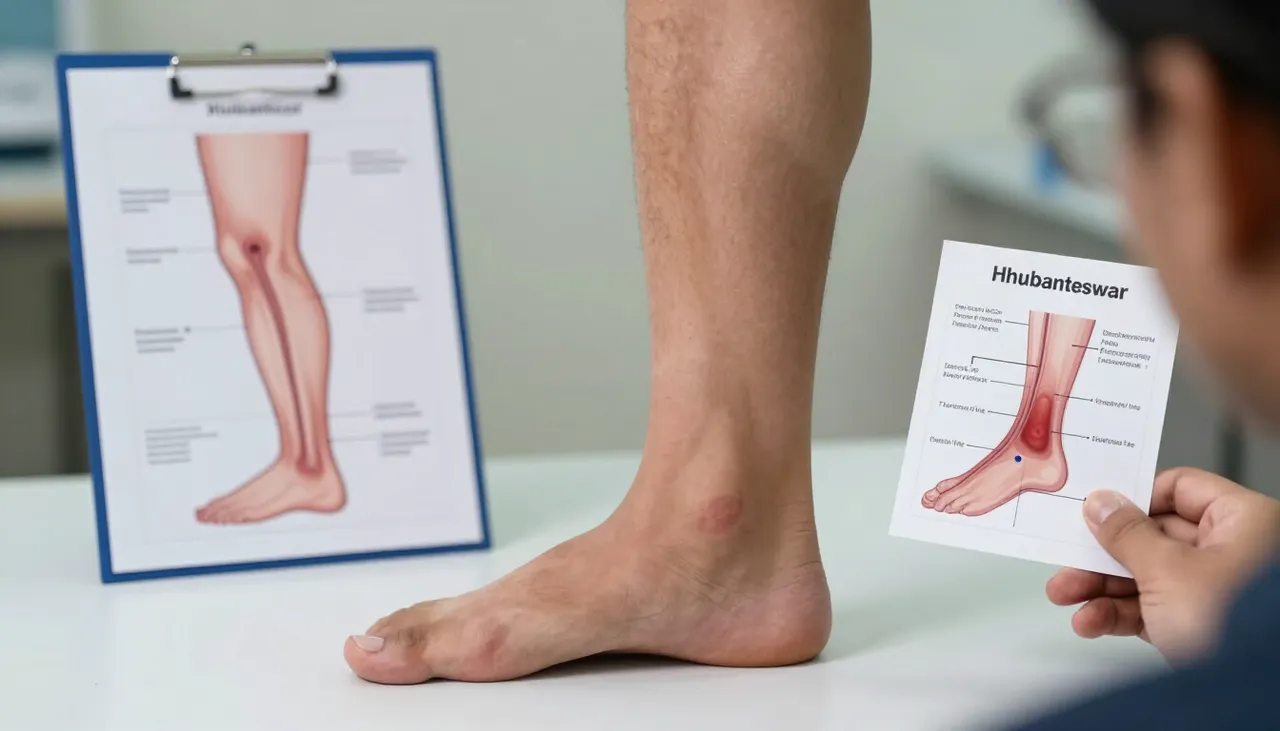
One-sided leg swelling — swelling in a single leg rather than both — is approached differently from both-sided swelling because it raises the possibility of a clot in the deep veins (deep vein thrombosis, DVT), which can be dangerous if a piece breaks off and travels to the lungs. It can also come from a local infection (cellulitis), an injury, a ruptured vein valve, or a blocked or compressed vein. Sudden one-sided leg swelling, especially with pain, warmth or tenderness, is assessed promptly rather than at a routine appointment. This page covers the one-sided pattern; both-sided swelling is covered on Bilateral Leg Swelling.
Common possible causes
- Deep vein thrombosis (DVT) — a clot in a deep leg vein.
- Cellulitis — a skin and tissue infection, usually with redness, heat and fever.
- Injury or a ruptured vein valve (Baker’s cyst rupture).
- A blocked or compressed vein, or a vein damaged by previous clot.
- After surgery, long travel, immobilisation, or with a clotting tendency.
- A local allergic or inflammatory reaction.
Symptoms and associated features
The key features are how quickly the swelling came on, whether it is painful, warm, tender or red, and whether there are risk factors for a clot — recent surgery, long travel, immobilisation, pregnancy, active cancer, or a personal or family history of clots. Swelling with calf tenderness, warmth and mild fever is treated as a possible clot until assessed. Sudden breathlessness or chest pain with one-sided leg swelling may indicate a clot that has reached the lungs and is an emergency.
Evaluation and investigations
Evaluation combines a history and examination with a leg Doppler ultrasound to look for a clot, alongside a D-dimer blood test where appropriate, and blood tests for infection markers and clotting tendency when indicated. See Abnormal Test Results.
Management overview
Management treats the cause. A confirmed clot is treated with blood thinners; cellulitis is treated with antibiotics; injury and ruptured cysts are managed according to the problem; and vein or compression causes are addressed specifically. Self-treatment of one-sided leg swelling is not appropriate — prompt assessment comes first.
Follow-up and monitoring
Follow-up confirms the cause is treated and the swelling is settling. A confirmed clot needs structured follow-up of blood-thinner treatment and, where relevant, a search for an underlying clotting tendency.
Warning signs — seek urgent care
- Sudden one-sided leg swelling with pain, warmth or tenderness — possible deep vein clot; urgent.
- One-sided leg swelling with sudden breathlessness or chest pain — possible clot in the lung; emergency.
- A swollen leg with spreading redness, heat and fever — possible infection; urgent.
- One-sided swelling after surgery or long travel — assess promptly.
How we help
Dr. Nayak assesses one-sided leg swelling promptly, arranges a leg Doppler and targeted tests, treats the underlying cause, and refers for emergency or specialist care when warning features are present. Consultations are available in-clinic in Bhubaneswar and over teleconsultation.
Related conditions and patient concerns
Explore more
Related conditions
Explore more
Related services
Take action now
Schedule your consultation today with Dr. Nayak
Don't wait to get the healthcare you deserve. Book your appointment in just a few clicks.