
Liver & Fatty Liver Health
Abnormal Ultrasound Showing Fatty Liver
What an ultrasound report of “fatty liver” means, how it is graded, what the next steps are, and when further assessment is needed.
Overview
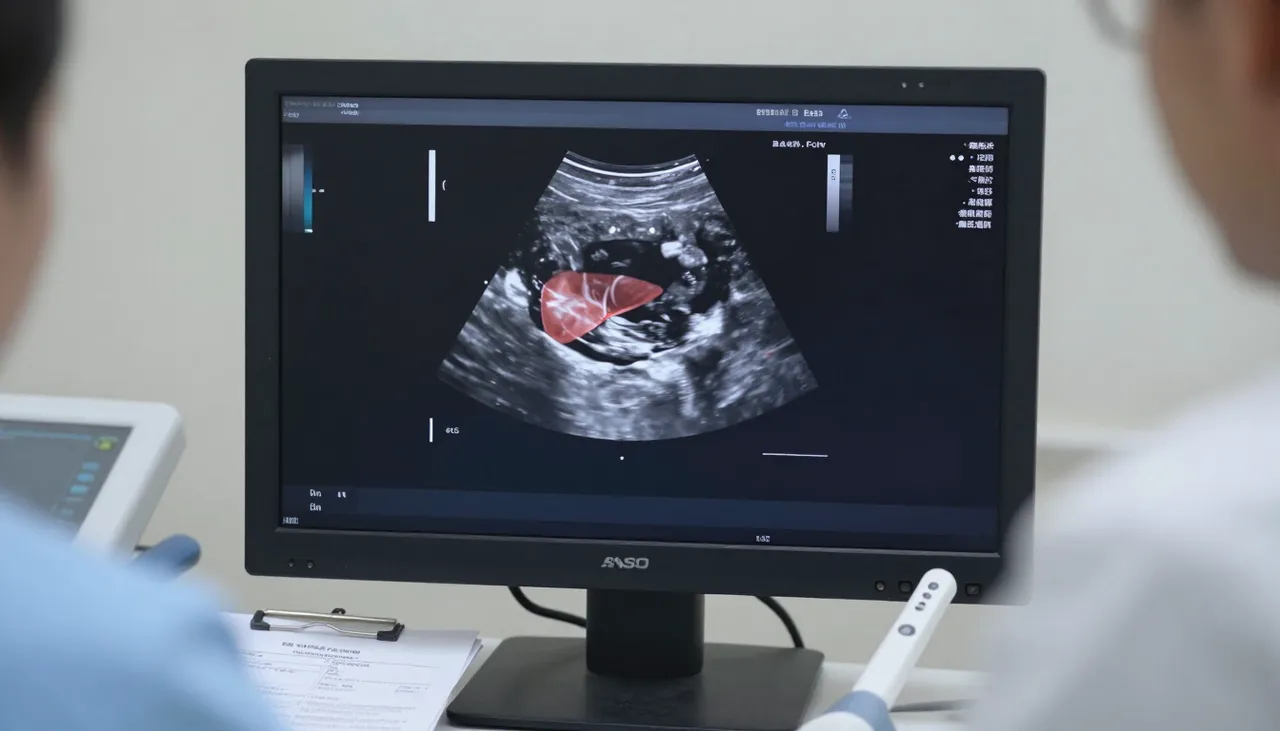
An ultrasound report that says “fatty liver”, “fatty infiltration” or “grade 1/2/3 fatty liver” is one of the commonest reasons people seek liver advice. The finding usually comes as a surprise, because most people have no symptoms. An ultrasound is good at detecting fat in the liver, but it cannot reliably tell how much inflammation or scarring is present — so the report is a starting point, not a complete answer. This page explains what the finding means and what to do next; the condition itself is covered on the Fatty Liver page.
What the grades mean
Ultrasound reports often grade fatty liver as grade 1 (mild), grade 2 (moderate) or grade 3 (severe), based on how bright the liver appears compared with the kidney. The grade reflects how much fat is visible, but it does not by itself tell you whether there is inflammation or scarring — a person with grade 1 fatty liver can still have significant disease, and a person with grade 3 can have none. The grade is one piece of information, read alongside blood tests and fibrosis risk.
What the ultrasound cannot tell
- Whether there is inflammation (steatohepatitis) — needs blood tests and context.
- How much scarring (fibrosis) is present — needs a fibrosis risk estimate or elastography.
- The underlying cause — needs a full history and selected blood tests.
Evaluation and next steps
After an ultrasound showing fatty liver, evaluation typically includes a full liver function test panel, blood sugar or HbA1c and a lipid profile, a viral hepatitis screen when appropriate, an alcohol and medicine review, and a fibrosis risk estimate (FIB-4, with elastography where indicated). See Liver Fibrosis Risk Assessment for how scarring is estimated. The aim is to confirm the cause, check for related metabolic conditions, and estimate whether scarring is present.
Management overview
For most people, management is lifestyle-led — gradual weight loss, regular activity, a balanced diet low in refined sugar, good control of diabetes, blood pressure and cholesterol, and alcohol avoidance. Follow-up ultrasound or fibrosis assessment is arranged according to risk. Unnecessary supplements are best avoided. See Fatty Liver Diet and Lifestyle for the practical guide.
Warning signs — seek prompt care
- Jaundice, dark urine or pale stools.
- Persistent or severe upper-right abdominal pain with fever.
- Swelling of the abdomen or legs.
- A sudden, large rise in liver enzymes on follow-up testing.
How we help
Dr. Nayak interprets the ultrasound report alongside blood tests, estimates fibrosis risk, identifies the cause, and builds a lifestyle-and-monitoring plan with follow-up. Consultations are available in-clinic in Bhubaneswar and over teleconsultation.
Related conditions and patient concerns
Explore more
Related conditions
Explore more
Related services
Take action now
Schedule your consultation today with Dr. Nayak
Don't wait to get the healthcare you deserve. Book your appointment in just a few clicks.