
Digestive Problems
Peptic Ulcer Disease
Sores in the stomach or duodenum — causes including H. pylori and painkillers, symptoms, diagnosis with endoscopy, and treatment.
Overview
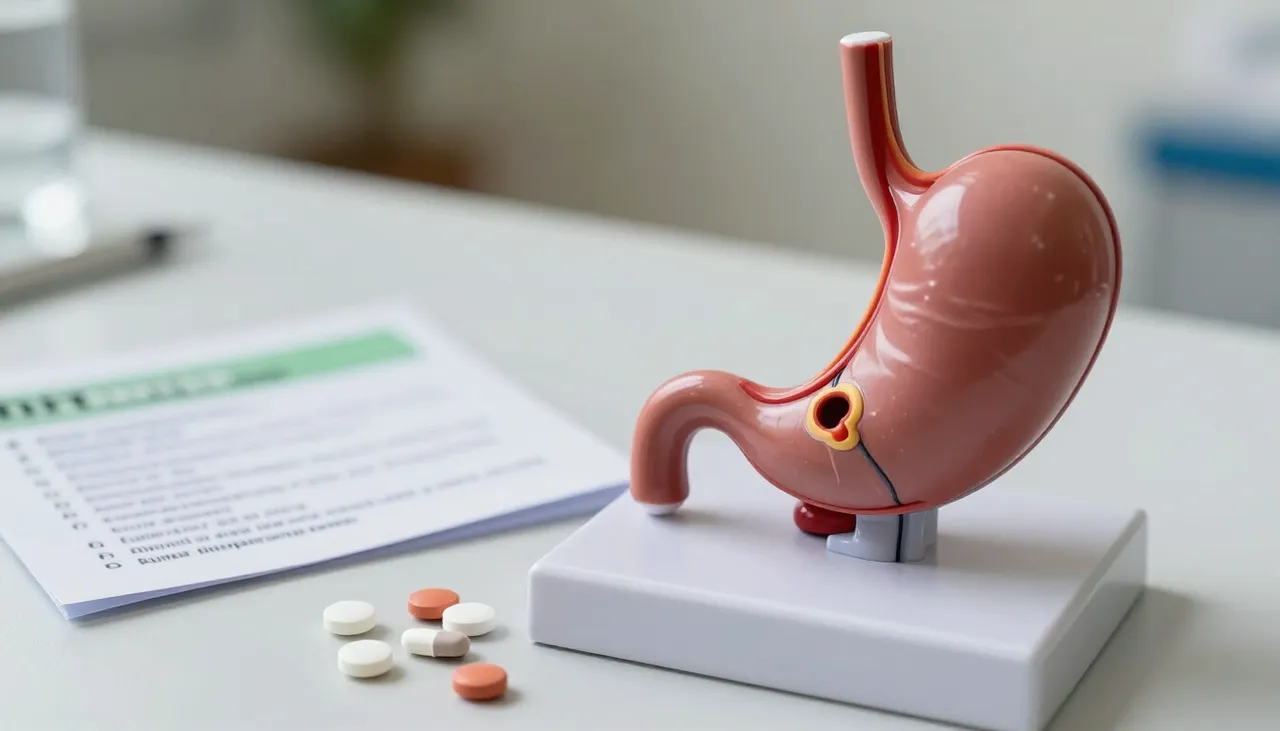
Peptic ulcer disease is the formation of sores (ulcers) in the lining of the stomach (gastric ulcer) or the first part of the small intestine (duodenal ulcer). The two commonest causes are H. pylori infection and the regular use of painkillers (non-steroidal anti-inflammatory drugs). Ulcers cause upper abdominal pain, often related to meals, and can lead to bleeding or, rarely, perforation if untreated. Most ulcers heal completely with the right treatment.
Symptoms
- Upper abdominal pain or burning, often related to meals.
- Pain that may ease or worsen with food, depending on the ulcer’s location.
- Bloating, belching and a feeling of fullness.
- Nausea and sometimes vomiting.
- Loss of appetite.
- In some cases: vomiting blood or black, tarry stools (signs of bleeding).
Causes
- H. pylori infection of the stomach — the commonest cause.
- Regular use of painkillers (NSAIDs) such as ibuprofen, aspirin or naproxen.
- Excess acid, sometimes related to stress or other illness.
- Smoking and alcohol, which impair healing.
Diagnosis
Diagnosis is confirmed with an upper gastrointestinal endoscopy, which directly shows the ulcer and allows testing for H. pylori. H. pylori can also be detected with breath, stool or blood tests. Blood tests check for anaemia when bleeding is suspected.
Treatment and management
Treatment combines acid-suppressing medicines (proton-pump inhibitors) to heal the ulcer, a specific antibiotic course to eradicate H. pylori when it is present, and stopping or reducing the offending painkillers. Smoking and alcohol are reduced. Most ulcers heal with a defined course of treatment, and eradication of H. pylori prevents recurrence. Follow-up confirms healing when needed.
Diet and lifestyle
- Eat regular, smaller meals; avoid long gaps without food.
- Limit spicy, fried and acidic foods during healing.
- Avoid smoking and excess alcohol.
- Use painkillers cautiously and only as advised, with stomach protection if needed.
Warning signs — seek urgent care
- Vomiting blood or coffee-ground material — emergency.
- Black, tarry stools — needs prompt assessment.
- Sudden, severe abdominal pain with a rigid abdomen — possible perforation; emergency.
- Dizziness, fainting or weakness with ulcer symptoms (possible bleeding).
- Persistent vomiting or severe pain despite treatment.
How we help
Dr. Nayak diagnoses ulcers with endoscopy, eradicates H. pylori when present, and builds a tailored treatment plan with follow-up — directing emergency cases to hospital. Consultations are available in-clinic in Bhubaneswar and over teleconsultation.
Related conditions and patient concerns
Explore more
Related conditions
Explore more
Related services
Take action now
Schedule your consultation today with Dr. Nayak
Don't wait to get the healthcare you deserve. Book your appointment in just a few clicks.