
Diabetes & Metabolic Health
Diabetic Foot Problems
Diabetes can damage feeling and circulation in the feet — making small wounds serious. Prevention and early care are essential.
Overview
The feet are particularly vulnerable in diabetes because high blood sugar can damage both the nerves (so you do not feel a cut or blister) and the blood vessels (so healing is poor). A small wound that would heal quickly in someone without diabetes can become a serious ulcer in someone with diabetes. The good news is that most foot problems are preventable with the right habits and early attention.
This page is the practical guide to protecting your feet. The nerve damage that makes feet vulnerable is explained in Diabetic Neuropathy, and the overall complications picture is in Diabetes Complications.
Why the feet are vulnerable
Two diabetes effects combine in the feet. Nerve damage (neuropathy) reduces sensation, so a stone in a shoe, a blister or a crack goes unnoticed and worsens. Reduced blood flow from damaged vessels slows healing, so even a small wound can deepen and become infected. Together these turn minor injuries into serious ulcers — which is why prevention matters far more than treatment after the fact.
Warning signs to watch for
- A cut, blister, corn or crack that is not healing.
- Redness, swelling, warmth or an unusual smell.
- A change in the colour or temperature of the foot.
- Loss of feeling, or new pain while walking.
- A blackened or darkened area of skin.
- Ingrowing toenails or fungal infection between the toes.
Daily foot care
- Inspect both feet every day, including the soles and between the toes — use a mirror or ask for help if needed.
- Wash and dry feet daily, especially between the toes.
- Moisturise dry skin, but avoid the areas between the toes.
- Trim nails straight across and file sharp edges; do not cut cuticles.
- Never walk barefoot, even indoors.
- Check inside shoes for stones or rough edges before wearing them.
Footwear
Well-fitting, closed footwear that protects the feet is essential. Avoid tight or pointed shoes, and break in new shoes gradually. Socks should be clean, dry and without tight bands. People with significant neuropathy may benefit from specially fitted footwear that redistributes pressure and prevents ulcers.
When to seek help urgently
- Any wound, blister or colour change that is not healing within a day or two.
- Spreading redness, warmth, swelling or pus.
- Pain or redness around a toenail.
- A darkened or blackened area of skin.
- Any foot infection with fever.
Early review almost always makes the problem easier to solve. A small ulcer treated promptly can heal; the same ulcer left for weeks can become serious. Do not attempt to self-treat corns, calluses or wounds at home.
How we help
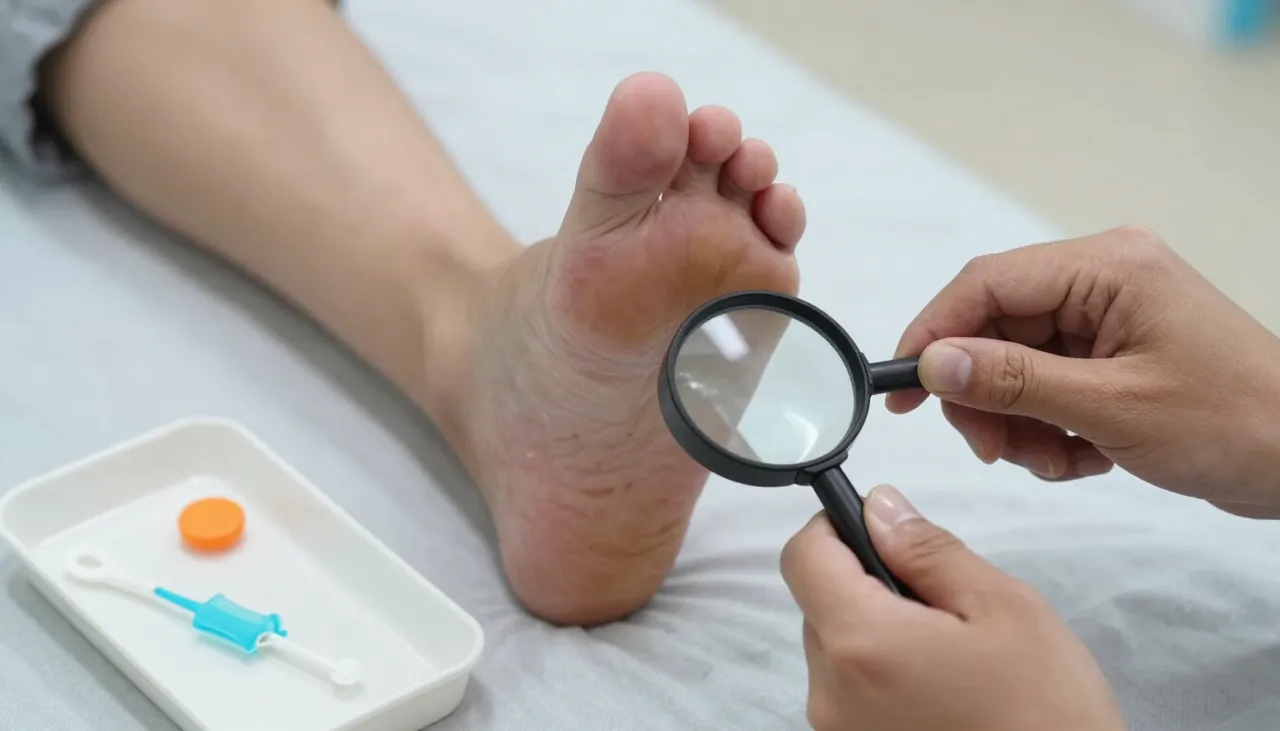
Dr. Nayak examines the feet at review visits, checks for loss of sensation and poor circulation, and teaches a simple daily foot-care routine — inspection, moisturising, suitable footwear and nail care. Any wound is assessed early and managed promptly to prevent it progressing to a serious ulcer. Consultations are available in-clinic in Bhubaneswar and over teleconsultation.
Related conditions and patient concerns
Foot problems stem from nerve and circulation damage and are part of the wider complications picture. These related pages complete the picture.
Explore more
Related conditions
Explore more
Related services
Take action now
Schedule your consultation today with Dr. Nayak
Don't wait to get the healthcare you deserve. Book your appointment in just a few clicks.