
Obesity & Weight Management
BMI and Weight Assessment
How body mass index and weight are interpreted in context — what the numbers mean, what they miss, and how a proper assessment judges real health risk.
Overview
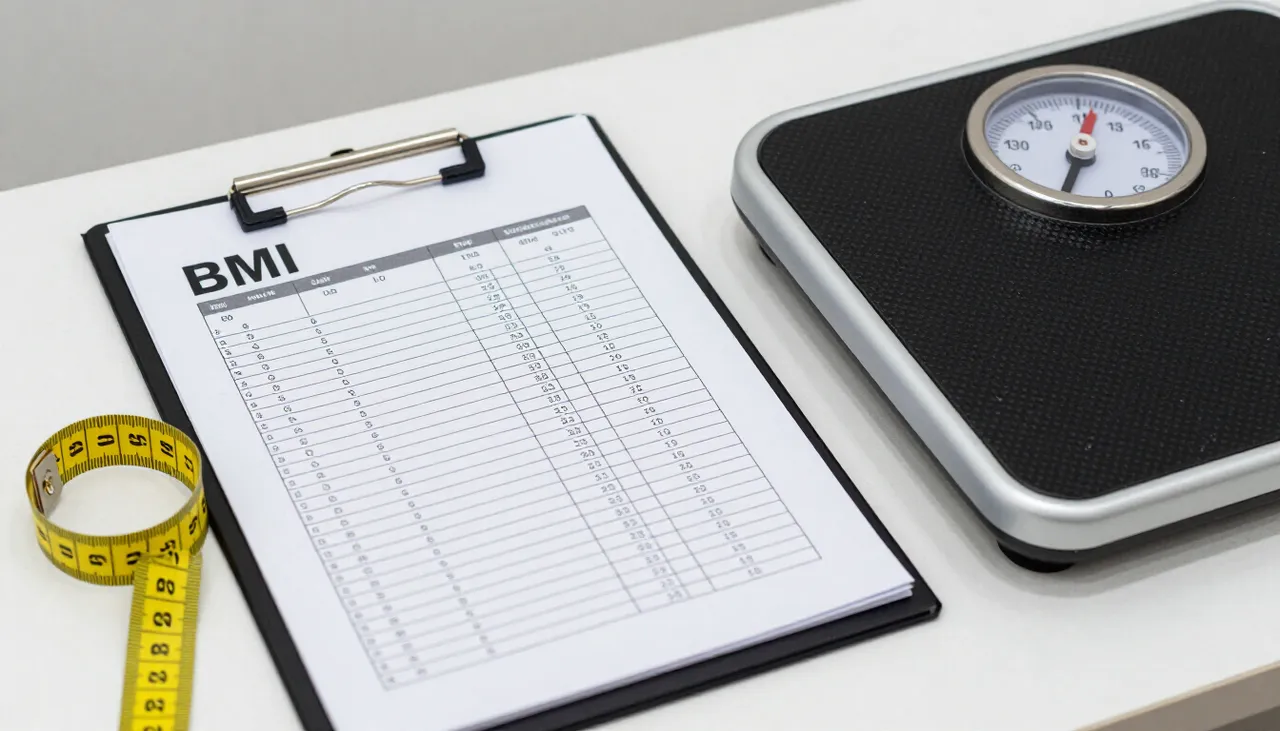
Body mass index (BMI) is the standard screening tool that relates weight to height, calculated as weight in kilograms divided by height in metres squared. It is useful for placing someone in a broad category — underweight, normal, overweight or obese — but it is not a complete measure of health. This page focuses on how BMI and weight are interpreted in a medical assessment; the conditions they point to are on the Obesity and Overweight pages.
The BMI categories
- Below 18.5 — underweight.
- 18.5–24.9 — normal range.
- 25–29.9 — overweight.
- 30–34.9 — obesity class I.
- 35–39.9 — obesity class II.
- 40 or above — obesity class III.
What BMI misses
BMI does not distinguish muscle from fat, does not say where fat is carried, and does not account for age, sex or ethnicity. A muscular person can register as “overweight” with little fat; an older person can have a “normal” BMI but too little muscle and too much abdominal fat; and for South Asian adults the health risks of excess fat begin at a lower BMI than the standard cut-offs suggest. This is why BMI is always read with waist circumference and the metabolic markers rather than on its own.
How a proper assessment works
A proper weight assessment combines BMI, waist circumference, the trend over time, blood pressure, and the metabolic blood tests (blood sugar, lipids, liver and thyroid function) to judge whether the weight is genuinely affecting health and what a realistic target is. The aim is not to push everyone toward an arbitrary “ideal” weight, but to identify real risk and set a sustainable goal. See High Waist Circumference and Abdominal Obesity.
How we help
Dr. Nayak interprets BMI and weight in context — with waist circumference, trend and metabolic markers — and sets a realistic, individualised target rather than a one-size-fits-all number. Consultations are available in-clinic in Bhubaneswar and over teleconsultation.
Related conditions and patient concerns
Explore more
Related conditions
Explore more
Related services
Take action now
Schedule your consultation today with Dr. Nayak
Don't wait to get the healthcare you deserve. Book your appointment in just a few clicks.