
Hypertension & Cardiovascular Risk
Hypertension
The medical condition of persistently raised blood pressure — its stages, how it is diagnosed, and the long-term approach to keeping it controlled.
Overview
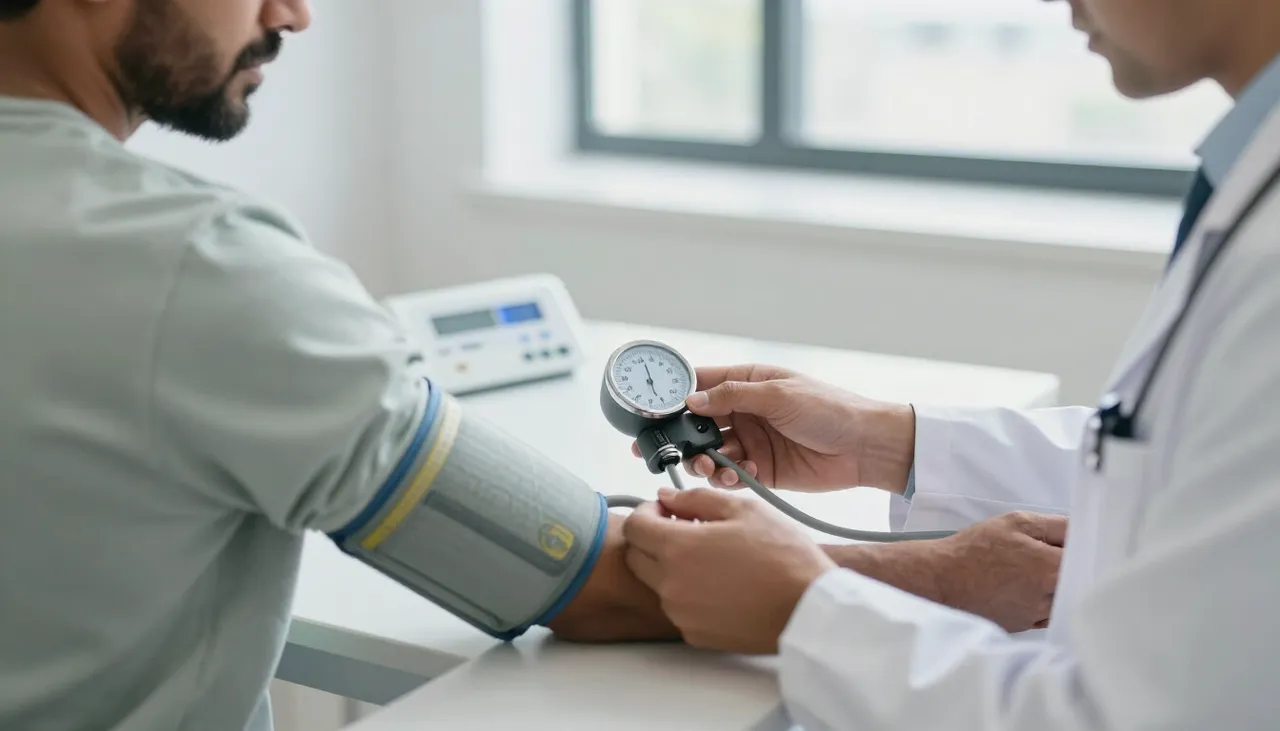
Hypertension is the medical term for persistently high blood pressure — readings that remain above the normal range on repeated measurement over days or weeks, rather than on a single occasion. It is the most common long-term condition in adults and a leading contributor to heart attack, stroke, kidney disease and premature death worldwide. Because it produces no symptoms in most people, it is often found only when blood pressure is checked.
This page is the clinical overview of hypertension as a condition. For what a single high reading means, see High Blood Pressure; for the practical side of confirming and tracking readings, see Blood Pressure Monitoring.
Stages of hypertension
Hypertension is graded by how high the readings are, because the level guides how quickly and how intensively it should be assessed and treated. Commonly used thresholds are:
- High-normal / elevated — readings in the 120–129 systolic or 80–84 diastolic range; lifestyle measures and monitoring.
- Stage 1 — 130–139 systolic or 85–89 diastolic; lifestyle measures, with medication considered based on overall risk.
- Stage 2 — 140/90 or above; usually warrants medication alongside lifestyle measures.
- Severe — 180/110 or above; needs prompt medical assessment, sometimes urgently.
Primary versus secondary hypertension
Most hypertension (around 9 in 10 cases) is “primary” or essential — it develops over years due to ageing, genetics and lifestyle, with no single identifiable cause. A smaller fraction is “secondary,” meaning an underlying condition is driving the pressure up — such as kidney disease, narrowing of the kidney artery, hormonal disorders (including some thyroid and adrenal problems), or certain medicines. Identifying secondary hypertension matters because treating the underlying cause can sometimes resolve the high pressure itself.
How hypertension is diagnosed
- Raised readings on several separate occasions, or
- Elevated readings on home monitoring over 4–7 days, or
- A 24-hour ambulatory recording above the diagnostic threshold.
- A single very high reading with symptoms needs prompt assessment regardless.
Why it must be treated
Untreated hypertension steadily damages the heart and arteries. The heart thickens and eventually weakens, arteries stiffen, and the small vessels of the brain, kidneys and eyes are injured. Treating blood pressure to target substantially lowers the risk of stroke, heart attack, heart failure and kidney failure — the benefit is among the largest in all of medicine for a single treatment.
Management principles
- Confirm the diagnosis before starting long-term treatment.
- Address lifestyle first and throughout — salt, weight, activity, alcohol, smoking.
- Choose medicines suited to your age, kidney function and other conditions.
- Start at sensible doses and adjust gradually to target.
- Treat overall cardiovascular risk, not the pressure number alone.
- Review medicines regularly; reduce where weight and lifestyle improve.
How we help
Dr. Nayak confirms the diagnosis with appropriate monitoring, assesses for any underlying cause and existing organ effects, and builds a treatment plan combining lifestyle and medication tailored to your overall risk. Control is reviewed over time with home and clinic readings so the plan stays effective and well tolerated. Consultations are available in-clinic in Bhubaneswar and over teleconsultation.
Related conditions and patient concerns
Hypertension connects to monitoring, specific situations and broader cardiovascular risk. These related pages complete the picture.
Explore more
Related conditions
Explore more
Related services
Take action now
Schedule your consultation today with Dr. Nayak
Don't wait to get the healthcare you deserve. Book your appointment in just a few clicks.