
Anaemia & Blood Problems
Nutritional Anaemia
Anaemia caused by a lack of iron, vitamin B12 or folate in the diet — the commonest form in India, how it is identified, treated and prevented.
Overview
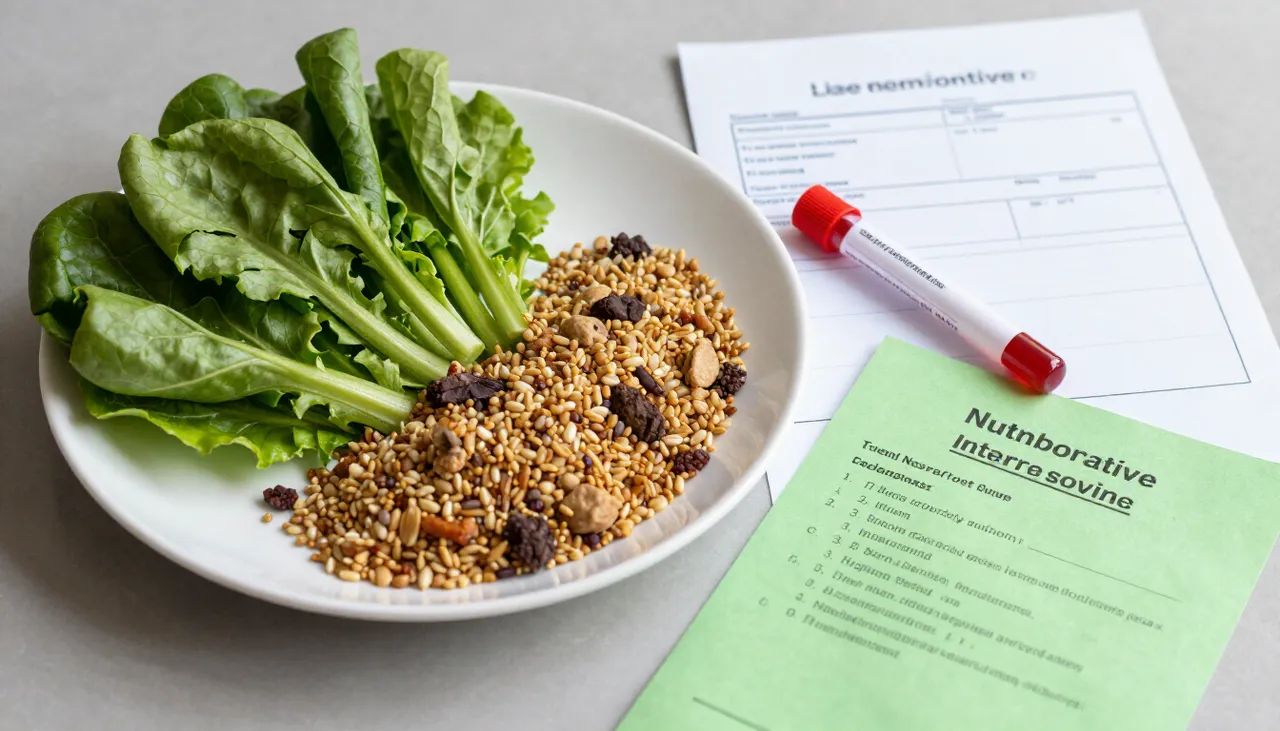
Nutritional anaemia is anaemia caused by not getting enough of the nutrients the bone marrow needs to make red blood cells — most often iron, but also vitamin B12 and folate. It is the commonest form of anaemia in India, driven by vegetarian diets with limited absorbable iron, heavy menstrual loss, repeated pregnancies, and inadequate intake of B12 and folate. It is largely preventable and reversible, but the specific deficiency must be identified and the underlying dietary or loss cause addressed, or the anaemia simply returns. This page gives the overview; the individual deficiencies link from here.
The three nutritional deficiencies
- Iron deficiency — the commonest; causes small red cells (see Iron Deficiency Anaemia, Iron Deficiency).
- Vitamin B12 deficiency — common in vegetarians; causes large red cells and possible nerve symptoms (see Vitamin B12 Deficiency).
- Folate deficiency — from poor intake, pregnancy or alcohol; causes large red cells (see Folate Deficiency).
Why it is so common in India
Indian diets are often low in haem iron (found in meat) and rich in phytates (in grains and lentils) that block iron absorption. Tea and coffee drunk with meals further reduce absorption. Heavy menstrual loss, closely spaced pregnancies, and worm infestations add to iron loss. Vegetarian diets can also be low in B12. Recognising these patterns allows a practical, food-based plan alongside any supplements.
Evaluation and investigations
Evaluation combines a complete blood count with red-cell indices and a peripheral smear, iron studies (ferritin, serum iron, transferrin saturation), and B12 and folate levels. The red-cell pattern points to which nutrient is lacking. The cause — dietary pattern, menstrual loss, digestive symptoms, worm infestation — is assessed in parallel. See Abnormal Complete Blood Count (CBC) and Abnormal Test Results.
Management overview
Treatment replaces the missing nutrient and addresses the cause — dietary improvement, absorption tips (vitamin C with meals, avoiding tea and coffee at mealtimes), menstrual or digestive loss, and deworming where relevant. Iron, B12 or folate are given as appropriate, with the response confirmed by repeat testing and treatment continued to refill stores. See Iron Deficiency Anaemia, Vitamin B12 Deficiency and Folate Deficiency.
Prevention
A balanced diet with iron-rich foods (leafy greens, lentils, jaggery, meat and fish where eaten), B12 sources or supplements in vegetarians, and folate-rich foods (greens, lentils, citrus) prevents most nutritional anaemia. Iron and folic acid supplementation in pregnancy, spacing of pregnancies, and treating worm infestations and menstrual loss are key public-health measures. See Preventive Health & Health Check-ups.
Warning signs — seek prompt care
- Anaemia not improving despite supplements — the cause or adherence needs review.
- Black or bloody stools with anaemia — possible digestive bleeding rather than pure nutritional lack.
- Nerve symptoms with anaemia — B12 deficiency needs prompt treatment.
How we help
Dr. Nayak identifies which nutrient is lacking, finds the dietary or loss cause, and builds a combined replacement-and-diet plan with monitoring to confirm recovery and prevent recurrence. Consultations are available in-clinic in Bhubaneswar and over teleconsultation.
Related conditions and patient concerns
Explore more
Related conditions
Explore more
Related services
Take action now
Schedule your consultation today with Dr. Nayak
Don't wait to get the healthcare you deserve. Book your appointment in just a few clicks.